








What's Happening?
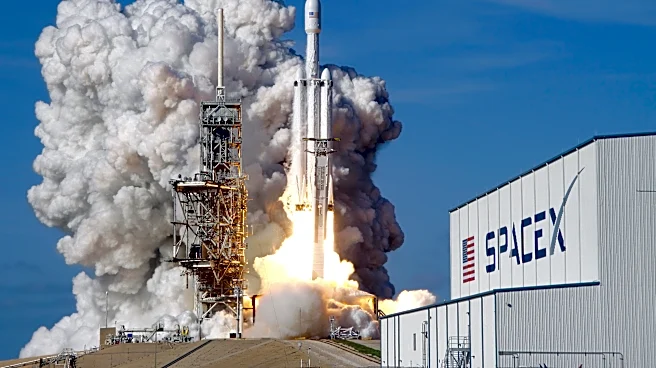
SpaceX, the aerospace company founded by Elon Musk, made a historic debut on Wall Street with its initial public offering (IPO), resulting in a 25% surge in share prices. The shares opened at $150 and quickly rose to $168.90, giving SpaceX a market valuation
of $2.21 trillion. This significant increase in value has propelled Musk's net worth to an estimated $1.1 trillion, making him the world's first trillionaire. The IPO raised $75 billion, surpassing the previous record set by Saudi Aramco in 2019. SpaceX plans to use the funds to further its ambitious goals of establishing a human colony on Mars and launching large-scale data centers into orbit.
Why It's Important?
The successful IPO of SpaceX marks a pivotal moment in the aerospace industry, highlighting the growing investor confidence in space exploration and technology. This development could accelerate advancements in satellite technology and interplanetary travel, potentially opening new markets and opportunities for economic growth. However, the high valuation has raised concerns among some analysts about the sustainability of such a rapid increase, given SpaceX's current financial losses. The IPO's success also underscores the influence of visionary leaders like Musk in driving innovation and attracting significant investment in high-risk, high-reward sectors.
What's Next?
Following the IPO, SpaceX is expected to focus on achieving its long-term objectives, including the colonization of Mars and the expansion of its satellite network. The company will likely seek additional funding to support these initiatives, which could involve further public offerings or strategic partnerships. Investors and stakeholders will be closely monitoring SpaceX's progress and financial performance, particularly in light of its ambitious goals and substantial capital requirements. The company's future developments could have far-reaching implications for the aerospace industry and global technological advancements.