







What's Happening?
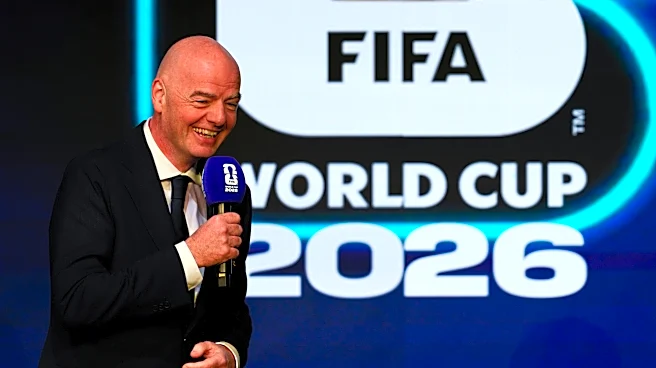
FIFA has revealed plans for a Super Bowl-style halftime show during the 2026 World Cup final, which will be held at MetLife Stadium in New Jersey. The show will feature performances by global music icons Madonna, Shakira, and BTS, with Coldplay's Chris
Martin curating the event. This marks the first time a halftime show of this nature will be included in a World Cup final. The initiative is part of FIFA's efforts to support the FIFA Global Citizen Education Fund, aiming to raise $100 million to provide educational and soccer opportunities for children worldwide. The announcement has generated mixed reactions, with some fans excited about the entertainment aspect, while others criticize it as a departure from traditional soccer culture.
Why It's Important?
The introduction of a halftime show at the World Cup final signifies a major shift in the presentation of soccer, potentially setting a precedent for future tournaments. This move could enhance the event's appeal to a broader audience, particularly in regions where such entertainment is a staple of major sports events. However, it also poses a risk of alienating purist fans who prefer the focus to remain solely on the sport. The decision reflects a broader trend of integrating entertainment into sports to boost commercial appeal and viewership, highlighting the evolving nature of global sports events.
What's Next?
As the World Cup approaches, FIFA will likely continue to promote the halftime show as a groundbreaking event. The organization may face ongoing debate over the appropriateness of such entertainment in a soccer context. The outcome of this initiative could influence future World Cup planning and potentially inspire similar integrations in other international sports events. Key stakeholders, including sponsors and broadcasters, will be watching closely to assess the impact on audience engagement and commercial success.
Beyond the Headlines
The inclusion of a halftime show at the World Cup final raises broader questions about the commercialization of sports and the balance between tradition and innovation. It underscores the influence of American sports culture on global events and the potential for cultural tensions as different fan bases react to changes in how their favorite sports are presented. The involvement of high-profile artists also highlights the increasing role of celebrity and entertainment in sports marketing strategies.