
What's Happening?
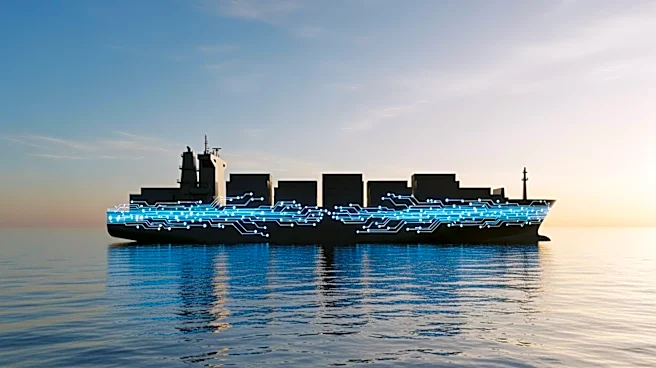
Robosys Automation has made significant advancements in autonomous navigation technology with its VOYAGER AI platform. The platform has been enhanced to support fully autonomous navigation, COLREGs-compliant
collision avoidance, dynamic path planning, and remote operation functionality. In 2025, Robosys successfully retrofitted the VOYAGER AI autonomy suite into a 26-meter Damen crew transfer vessel for offshore wind operations, marking its first major entry into the offshore renewable energy sector. This development demonstrates the practical deployment of autonomous navigation and remote-control capabilities in demanding industrial environments. The platform aims to build trust across the industry, including seafarers, ship managers, flag states, and insurance companies, by ensuring reliable and safe operations.
Why It's Important?
The advancements in autonomous navigation technology by Robosys Automation are crucial for the maritime industry, particularly in enhancing safety and efficiency. The integration of autonomous systems can significantly reduce human error, which is a leading cause of maritime accidents. By providing reliable and safe navigation solutions, the VOYAGER AI platform can help mitigate risks associated with human-technology interactions on the bridge. This technology also supports the growing demand for renewable energy by facilitating operations in offshore wind sectors. As the industry moves towards more automated solutions, building trust in these systems is essential for widespread adoption and regulatory acceptance.
What's Next?
As autonomous navigation technology continues to evolve, the maritime industry is likely to see increased adoption of such systems. Future developments may focus on further enhancing the capabilities of autonomous platforms to handle more complex maritime environments. Stakeholders, including regulatory bodies, may need to update guidelines and standards to accommodate the integration of autonomous systems. Additionally, ongoing research and trials will be necessary to ensure the reliability and safety of these technologies, fostering greater confidence among industry players.