




What's Happening?
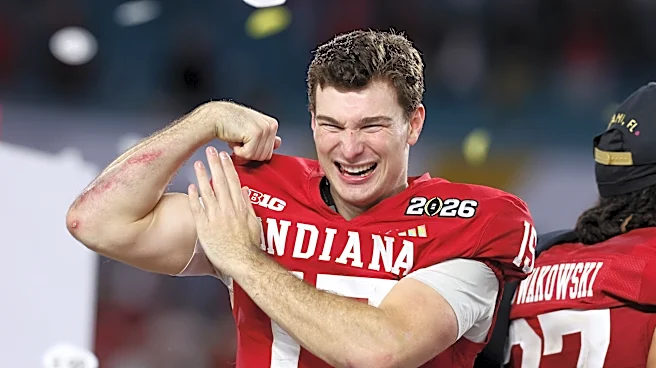
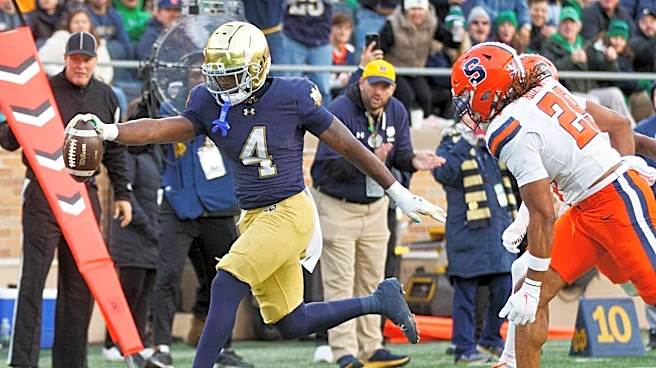
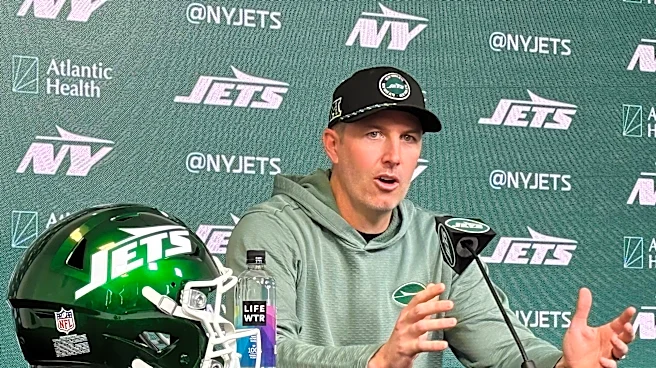
Arvell Reese, a standout linebacker and edge rusher from Ohio State, was initially expected to be selected by the New York Jets with the second pick in the 2026 NFL Draft. Reese, who has won numerous awards during his college career, is now facing competition
from Texas Tech's David Bailey. According to recent mock drafts, Bailey has surpassed Reese on many draft boards, including ESPN's Mel Kiper Jr., who predicts Bailey will be picked by the Jets. The Las Vegas Raiders are anticipated to select Fernando Mendoza as the first overall pick. Despite this shift, Reese is still projected to be a top pick, with analysts suggesting he could be selected by the Arizona Cardinals at No. 3. The Cardinals, under coach Jonathan Gannon, are looking to improve their defense, which struggled last season.
Why It's Important?
The potential shift in Arvell Reese's draft position highlights the dynamic nature of NFL draft evaluations and the impact of player performance and team needs. Reese's situation underscores the importance of adaptability and readiness in professional sports, as teams weigh immediate impact against long-term potential. For the Jets, selecting Bailey over Reese could signal a strategic focus on enhancing their pass rush capabilities. The decision could also influence other teams' draft strategies, particularly those in need of defensive talent. Reese's eventual landing spot will affect not only his career trajectory but also the defensive strategies of the team that selects him.
What's Next?
As the draft approaches, teams will continue to evaluate their options, considering both immediate needs and future potential. Reese's performance at Ohio State and his pro day will be scrutinized by teams like the Arizona Cardinals, Tennessee Titans, and Washington Commanders, all of whom could benefit from his skills. The Titans, for instance, are looking to bolster their defense under coach Robert Saleh, while the Commanders have shown interest in defensive talent. Reese's draft position will ultimately depend on how teams prioritize their needs and assess his potential impact.