


What's Happening?
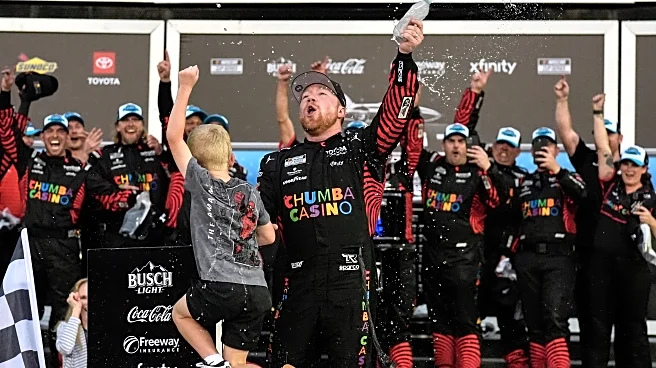
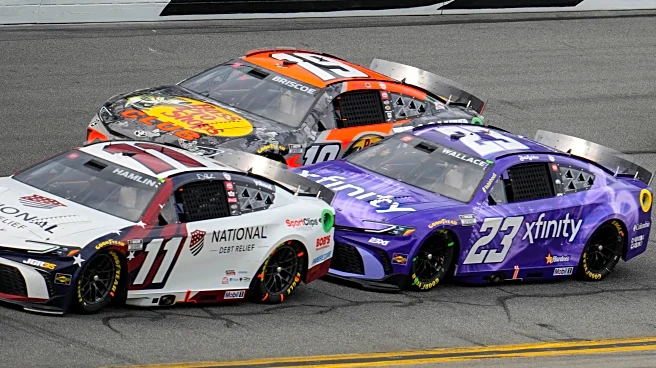
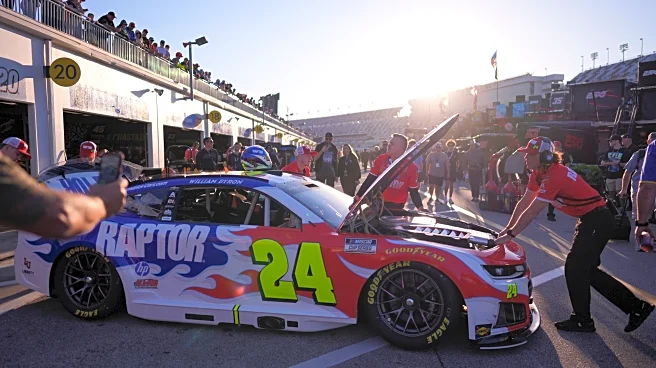
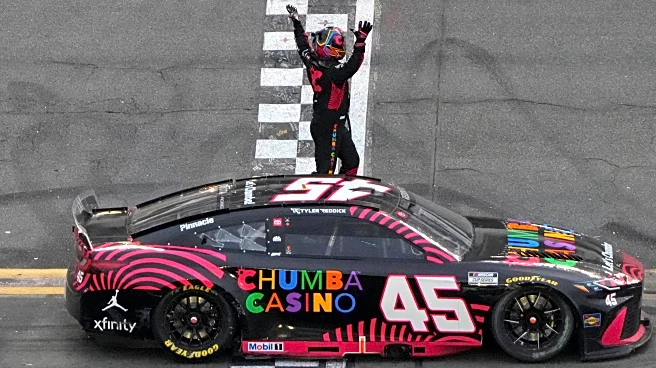
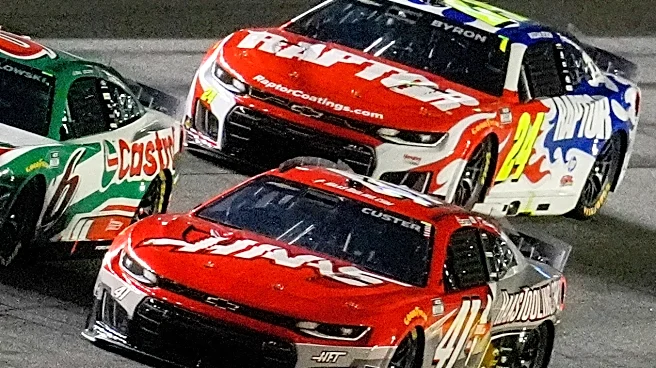
William Byron's quest to become the first NASCAR Cup driver to win three consecutive Daytona 500 races ended in disappointment. Despite a challenging start, including a qualifying crash and involvement in multiple wrecks during the race, Byron managed to finish 12th. The race was marked by a dramatic final lap where Tyler Reddick emerged victorious, securing the first Daytona 500 win for 23XI Racing. Byron's efforts were notable as he pushed Reddick into the lead during the final laps, but ultimately, he could not secure the historic win. The race saw intense competition with nine cars finishing within three-tenths of a second of each other.
Why It's Important?
The outcome of the Daytona 500 is significant for several reasons. For William Byron, failing to secure
a third consecutive win highlights the unpredictable nature of NASCAR racing and the challenges drivers face in maintaining dominance. For 23XI Racing, the victory marks a milestone, showcasing the team's growing competitiveness in the NASCAR Cup Series. This win also underscores the strategic importance of teamwork and race strategy, as demonstrated by Reddick's collaboration with his teammates. The race's conclusion also reflects the intense competition within NASCAR, with multiple teams and drivers vying for top positions, which can influence sponsorships, team morale, and fan engagement.
What's Next?
Looking ahead, William Byron and his team will likely analyze the race to improve their strategies for future competitions. The focus will be on addressing the issues that led to the early setbacks and ensuring better performance in upcoming races. For 23XI Racing, the victory could boost their confidence and position them as strong contenders in the NASCAR Cup Series. Other teams will also be evaluating their performances, aiming to refine their strategies and enhance their competitiveness. The Daytona 500 results may influence team dynamics, sponsorship deals, and the overall landscape of the NASCAR season.