








What's Happening?
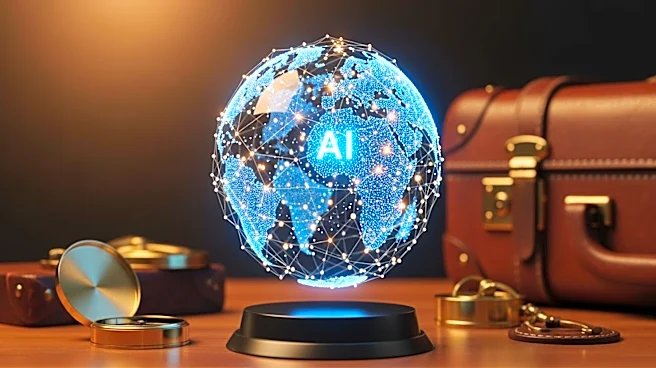
The travel industry is undergoing a significant transformation with the integration of artificial intelligence (AI) tools, which are reshaping how travelers plan and book their journeys. AI-powered itinerary planners and chatbots are becoming prevalent,
allowing travelers to generate personalized itineraries and receive recommendations quickly. This shift is forcing traditional travel businesses to rethink their strategies, as AI can provide information faster than human agents. Despite the convenience offered by AI, industry analysts emphasize the continued importance of human expertise, especially in situations requiring judgment and problem-solving, such as flight cancellations or political instability.
Why It's Important?
The rise of AI in the travel industry presents both challenges and opportunities for traditional travel businesses. Companies that fail to adapt to digital transformation risk losing visibility in an increasingly automated marketplace. However, those that embrace AI as a support tool can enhance their competitiveness by focusing on personalization and customer relationships. The integration of AI is expected to accelerate, reshaping customer expectations and booking behaviors. Trust and human insight are becoming valuable assets in an AI-driven market, as travelers still seek reassurance and authenticity in their experiences.
What's Next?
As AI continues to influence the travel industry, businesses will need to find a balance between technology and human interaction. Travel companies may need to invest in AI tools to streamline operations while maintaining a focus on customer service and personalization. The role of travel agents and tour operators may evolve, with a greater emphasis on handling complex travel needs and providing emotional and experiential value. The industry will likely see increased competition as AI tools become more widespread, making differentiation through human expertise and trust even more critical.