


What's Happening?
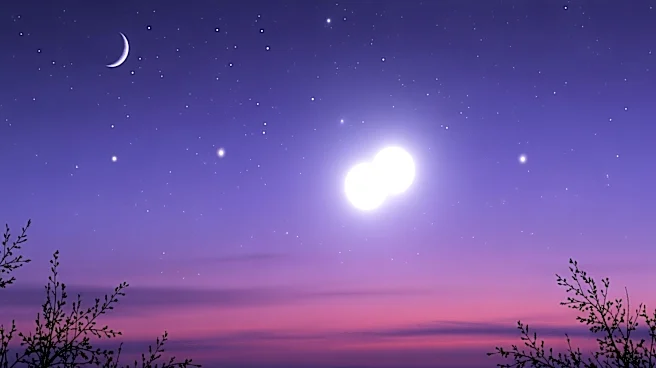
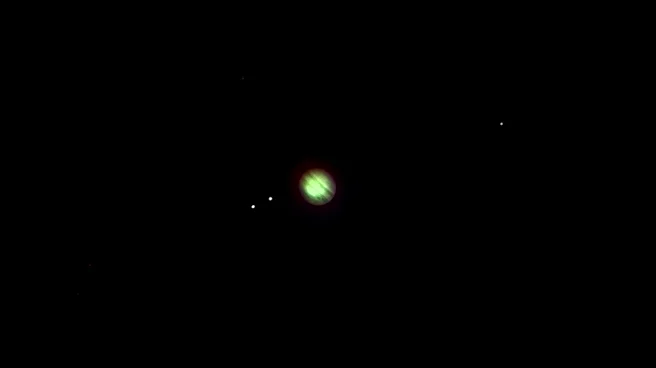
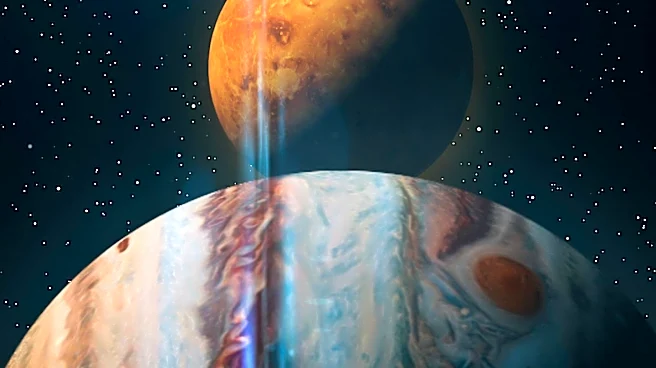
Skywatchers are eagerly anticipating a celestial event where Venus and Jupiter will appear in a close conjunction in the night sky. On June 9, the two planets will be just 1.6 degrees apart, creating a striking visual spectacle. This conjunction will be visible
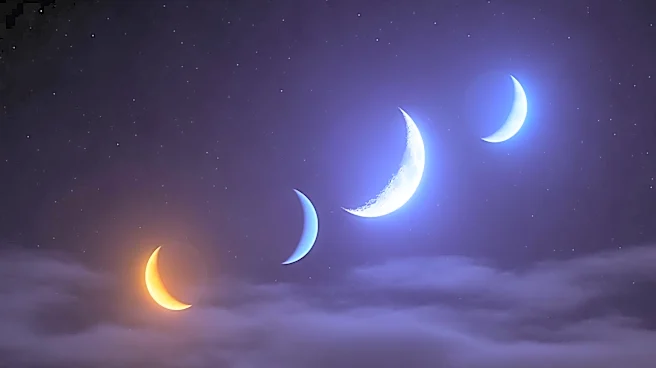
low in the western sky about 45 minutes after sunset, providing a unique opportunity for observers to witness the two brightest planets seemingly close together. The event is part of a larger 'planet parade' that includes Mercury and will be enhanced by a waxing crescent moon on June 16-17.
Why It's Important?
Planetary conjunctions like this one are significant for both amateur and professional astronomers as they offer a chance to observe celestial mechanics in action. The event highlights the beauty and complexity of our solar system, sparking interest and curiosity about astronomy. For the general public, such events can inspire a greater appreciation for science and the natural world. The conjunction also serves as a reminder of the vastness of space and our place within it, encouraging educational outreach and public engagement with astronomy.
What's Next?
Following the conjunction, Jupiter will continue to move toward the horizon, while Venus will climb higher in the sky, remaining a prominent feature throughout the summer. Observers are encouraged to take advantage of the extended viewing window from June 4-14 to witness the planets' proximity. The event will be further enhanced by the presence of a waxing crescent moon on June 16-17, offering additional opportunities for skywatchers to enjoy the celestial display.