






What's Happening?
Omar Artan, a prominent Somali referee, was denied entry to the United States for the World Cup due to 'vetting concerns' by U.S. Customs and Border Protection. Despite this, FIFA has decided to pay Artan his full tournament fee, as confirmed by a source
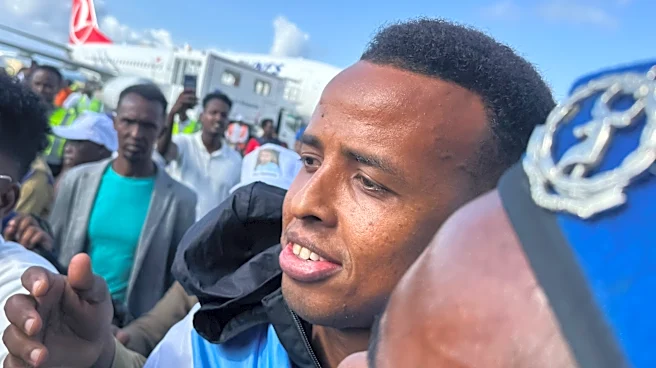
familiar with the situation. Artan, recognized as Africa's best male referee in 2025, was initially granted a visa processed by the Somalia Embassy in Kenya. He was scheduled to join other referees in Miami for the World Cup. However, upon arrival at Miami International Airport from Istanbul, he was deemed inadmissible. FIFA clarified that it does not handle immigration processes, which are determined by the host government. Artan has since returned to Somalia, where he received a hero's welcome and expressed his intention to participate in the 2030 World Cup, which will be held in Morocco, Portugal, and Spain. Additionally, he has been appointed to officiate the UEFA Super Cup in August.
Why It's Important?
The incident highlights the complexities and challenges faced by international sports officials due to immigration policies. Artan's case underscores the potential impact of such policies on global sporting events, where the participation of key officials can be hindered by entry denials. This situation also reflects on the broader implications for international relations and the sports community, as it raises questions about the balance between security measures and the facilitation of global events. FIFA's decision to honor Artan's fee despite his inability to officiate demonstrates a commitment to supporting its officials and maintaining the integrity of the sport. This move may set a precedent for how similar situations are handled in the future, potentially influencing policy discussions around the treatment of international sports personnel.
What's Next?
Artan's future participation in international events remains a topic of interest, particularly his role in the 2030 World Cup. His appointment to the UEFA Super Cup indicates continued recognition of his skills despite the setback. The incident may prompt discussions within FIFA and other sports organizations about how to better support officials facing immigration challenges. Additionally, it could lead to increased dialogue between sports bodies and governments to ensure smoother processes for international events. Stakeholders in the sports community may advocate for clearer guidelines and support systems to prevent similar occurrences, ensuring that key personnel can fulfill their roles without undue hindrance.