
What's Happening?
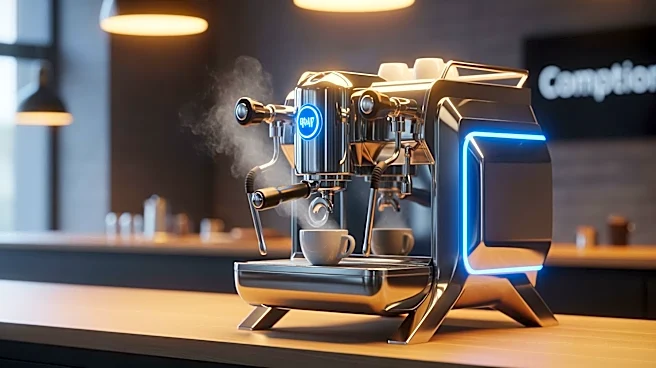
In a recent coffee-making competition held during Shanghai's 5.5 Shopping Festival and Coffee Culture Festival, a 7th-generation robot barista named COFE+ outperformed a human competitor. Developed by
Shanghai Hi-Dolphin, COFE+ demonstrated superior speed and precision by completing three Americanos in 2 minutes and 43 seconds, with a weight deviation of ±0.8 grams. In contrast, the human barista took 3 minutes and 35 seconds, with a weight deviation of ±2.1 grams. The robot's performance was nearly 1.5 times faster and three times more precise than the human competitor, challenging the notion that handcrafted coffee is inherently superior.
Why It's Important?
The success of COFE+ in the competition highlights the growing potential of humanoid robots in practical applications such as coffee service. This development could significantly impact the coffee industry by reducing operating costs and increasing efficiency. The COFE+ robot can prepare over 300 beverage types and offers more than 5,000 customization options, making it a versatile tool for café operators. With operating costs potentially 90% lower than traditional cafés, the adoption of such technology could lead to a shift in how coffee businesses operate, potentially reducing the need for human labor and altering the job market in the service industry.
What's Next?
The introduction of COFE+ and similar technologies may lead to increased automation in the food and beverage industry. Café operators might consider integrating robotic baristas to cut costs and improve service efficiency. As these technologies become more widespread, there could be a push for regulatory frameworks to ensure food safety and quality standards are maintained. Additionally, the market for robotic baristas could expand globally, with companies seeking to capitalize on the cost-saving benefits and enhanced service capabilities.