





What's Happening?
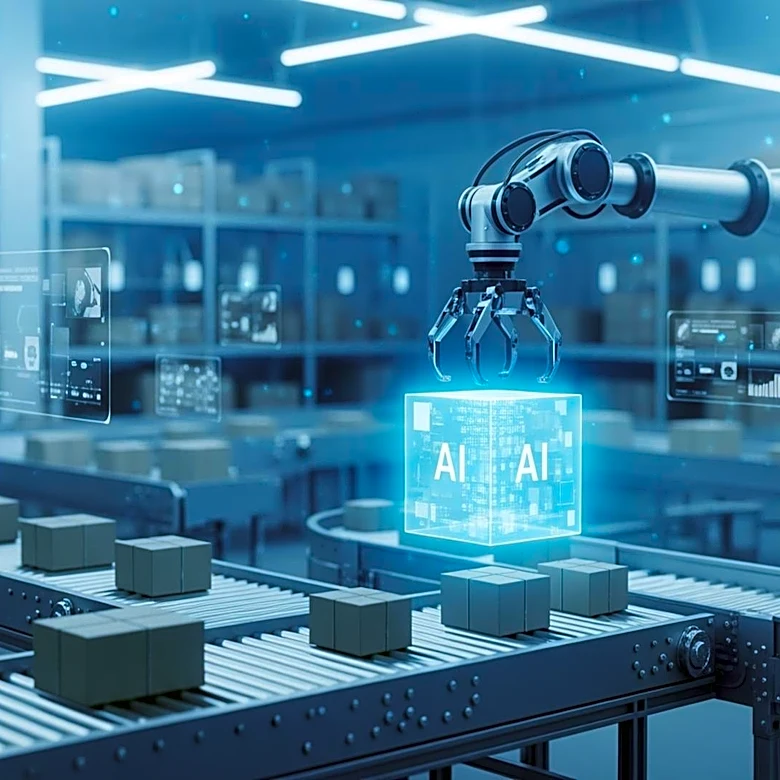
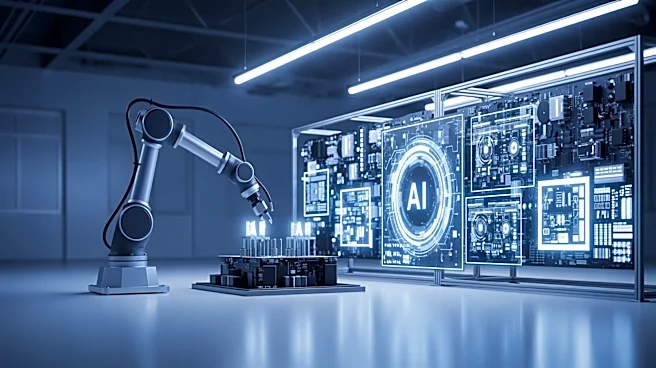
Agentic AI is transforming the manufacturing industry by enabling autonomous, goal-driven agents to act within human-set guidelines. These AI agents are designed to reduce decision latency by performing tasks such as detecting anomalies, rescheduling
production batches, and identifying defect patterns without manual intervention. This proactive orchestration allows systems to turn awareness into action, significantly improving efficiency across multiple layers of the enterprise. The technology is being implemented in various manufacturing processes, from maintenance and quality control to production scheduling, effectively acting as a digital nervous system for modern factories.
Why It's Important?
The introduction of agentic AI in manufacturing is crucial as it addresses the long-standing issue of decision latency, which can significantly impact production efficiency. By reducing the time taken to make decisions from minutes to milliseconds, manufacturers can enhance their responsiveness to operational challenges, leading to increased productivity and reduced downtime. This technological advancement not only improves operational efficiency but also provides a competitive edge by enabling factories to adapt quickly to disruptions. The ability to make faster and more informed decisions is becoming a key differentiator in the manufacturing sector, potentially reshaping industry standards and practices.
What's Next?
As agentic AI continues to be integrated into manufacturing processes, companies are likely to expand its use across different operational areas. The focus will be on scaling these AI agents across enterprises, requiring a structured approach to ensure seamless collaboration between various specialized agents. This will involve developing governance frameworks to maintain trust and compliance, as well as enhancing contextual sensing capabilities to unify data across operational and informational technology systems. The ongoing evolution of agentic AI is expected to drive further innovation in manufacturing, potentially leading to new business models and operational strategies.
Beyond the Headlines
The deployment of agentic AI in manufacturing raises important ethical and governance considerations. Ensuring that AI agents operate within defined boundaries and maintain transparency in decision-making processes is critical to building trust among stakeholders. Additionally, the shift towards autonomous decision-making may have implications for workforce dynamics, necessitating new skill sets and roles for human operators. As AI continues to evolve, manufacturers will need to address these challenges to fully realize the benefits of this technology while ensuring ethical and responsible use.