






What's Happening?
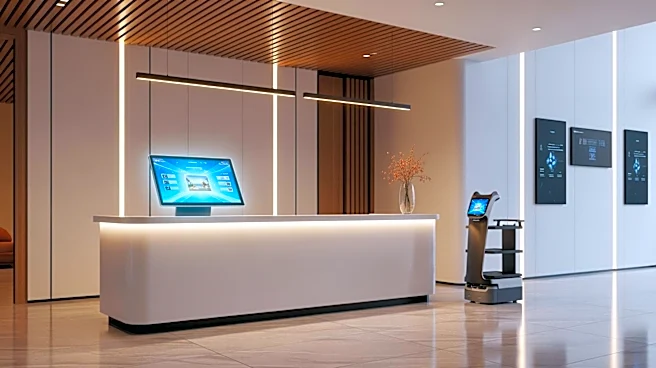
The hospitality industry is increasingly adopting artificial intelligence (AI) to address structural inefficiencies and improve service delivery. A recent analysis highlights that many tasks within hotel operations, such as check-in processing and payment
reconciliation, are high-frequency and low-judgment, making them suitable for AI integration. This shift aims to free human staff from routine tasks, allowing them to focus on high-touch, guest-centric activities. The industry faces a dual challenge of being both understaffed and overstaffed due to fragmented systems that require human intervention. By implementing AI, hotels can streamline operations, reduce labor costs, and enhance guest experiences.
Why It's Important?
The integration of AI in the hospitality sector is significant as it addresses long-standing operational inefficiencies and labor challenges. By reallocating human resources from mundane tasks to more value-added services, hotels can improve customer satisfaction and operational efficiency. This transformation is crucial as labor costs continue to rise, accounting for a significant portion of hotel operating expenses. Moreover, the adoption of AI can help the industry overcome its reputation for being slow to embrace new technologies, positioning it for future competitiveness and sustainability.
What's Next?
As hotels continue to integrate AI, the focus will likely shift towards building robust data infrastructures that support seamless AI operations. This includes creating unified intelligence layers that ensure consistent and accurate data across all systems. The industry may also see increased investment in training and development to equip staff with the skills needed to work alongside AI technologies. Additionally, as AI becomes more prevalent, regulatory frameworks and governance structures will need to evolve to address potential ethical and operational challenges.
Beyond the Headlines
The move towards AI in hospitality is not just about technology adoption but also about redefining the industry's operational model. This shift could lead to a cultural change within the industry, emphasizing the importance of human interaction and personalized service. As AI takes over routine tasks, the role of hospitality professionals may evolve to focus more on creating memorable guest experiences. This transformation could also influence other service-oriented industries, setting a precedent for how AI can be leveraged to enhance human-centric services.