
What's Happening?
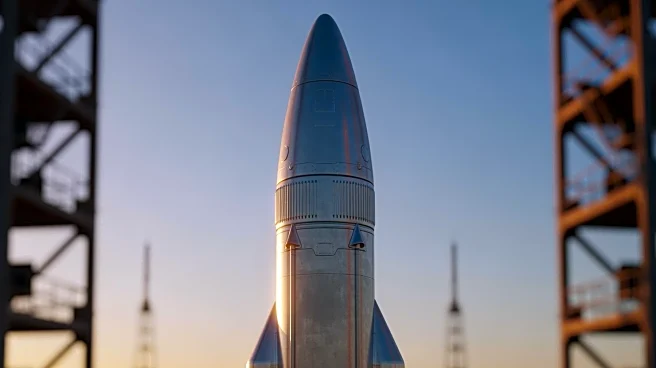
The United Launch Alliance (ULA) is set to launch a batch of Amazon's internet satellites into orbit using an Atlas V rocket. The launch is scheduled for December 16, 2025, from Cape Canaveral Space Force
Station in Florida. This mission will deploy 27 satellites as part of Amazon's Project Leo, previously known as Project Kuiper. The initiative aims to establish a satellite-internet megaconstellation in low Earth orbit, eventually comprising approximately 3,200 satellites. This launch marks the fourth Project Leo mission utilizing the Atlas V rocket, which has been a reliable vehicle since its debut in 2002. ULA plans to phase out the Atlas V in favor of the newer Vulcan Centaur rocket. The weather forecast for the launch is favorable, with a 95% chance of acceptable conditions.
Why It's Important?
The deployment of Amazon's internet satellites is a significant step in the expansion of global internet connectivity. Project Leo is designed to compete with SpaceX's Starlink, which already operates a large constellation of satellites providing internet services worldwide. The success of this launch could enhance Amazon's position in the satellite internet market, offering an alternative to existing services. This development is crucial for remote and underserved areas, potentially bridging the digital divide by providing reliable internet access. Additionally, the collaboration with various rocket providers, including SpaceX, Arianespace, and Blue Origin, highlights the competitive and cooperative dynamics within the space industry.
What's Next?
Following this launch, Amazon plans to continue expanding its satellite network with more than 80 launches scheduled to complete the Project Leo constellation. The transition from the Atlas V to the Vulcan Centaur rocket will be a key focus for ULA as they aim to modernize their launch capabilities. The success of Project Leo could prompt further investments in satellite technology and infrastructure, potentially leading to advancements in internet services and connectivity. Stakeholders, including internet service providers and technology companies, will likely monitor the project's progress closely, assessing its impact on the market and potential partnerships.