





What's Happening?
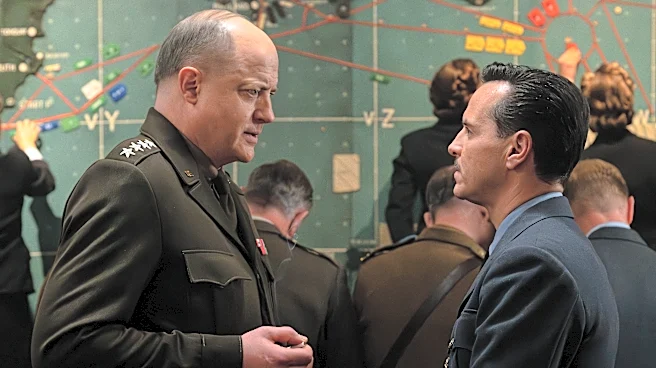
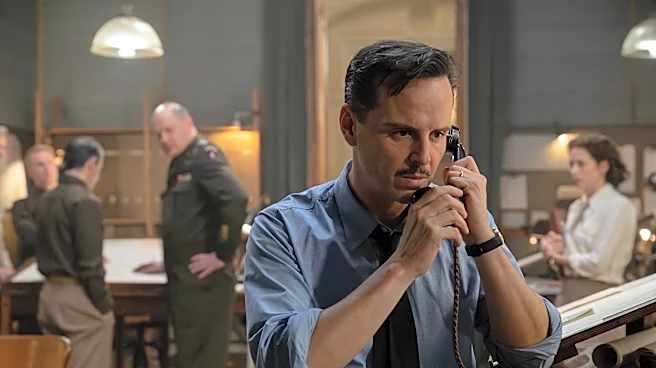
The film 'Pressure,' directed by Anthony Maras and written by David Haig, explores the critical role of meteorologists in the success of D-Day during World War II. Set in General Dwight D. Eisenhower's war room, the movie focuses on the tense days leading
up to the invasion of Normandy, emphasizing the importance of accurate weather forecasting. Brendan Fraser portrays Eisenhower, while Andrew Scott plays Group Capt. Chief Meteorologist James Stagg, who faces the challenge of predicting weather conditions crucial for the operation. The film is adapted from Haig's 2014 play and highlights the historical significance of meteorological decisions in military strategy.
Why It's Important?
The film underscores the often-overlooked role of meteorologists in military operations, particularly during pivotal moments like D-Day. Accurate weather forecasting was essential for the success of the invasion, affecting troop movements and strategic planning. By dramatizing this aspect, 'Pressure' brings attention to the complexities and stakes involved in wartime decision-making. The film also serves as a reminder of the broader implications of weather on human activities, including its impact on historical events and its relevance in contemporary discussions about climate change.
What's Next?
While the film 'Pressure' is a historical drama, its release may spark renewed interest in the role of meteorology in military history and strategy. It could lead to further exploration of similar themes in other media, as well as discussions about the importance of weather forecasting in current military and civilian contexts. The film's portrayal of the tension between different forecasting methods might also inspire debates on the evolution of meteorological science and technology.
Beyond the Headlines
The film's focus on meteorology during World War II highlights the ethical and philosophical dimensions of weather forecasting. It raises questions about the reliability of historical data versus real-time observations, and the impact of these decisions on human lives. The narrative also touches on the broader theme of human interaction with nature, emphasizing the unpredictability and power of weather as a force that shapes history.