
What's Happening?
Rolls-Royce SMR has entered into a strategic agreement with Yokogawa Electric Corp. to supply data processing and control systems for its small modular reactor (SMR) program. This partnership will see
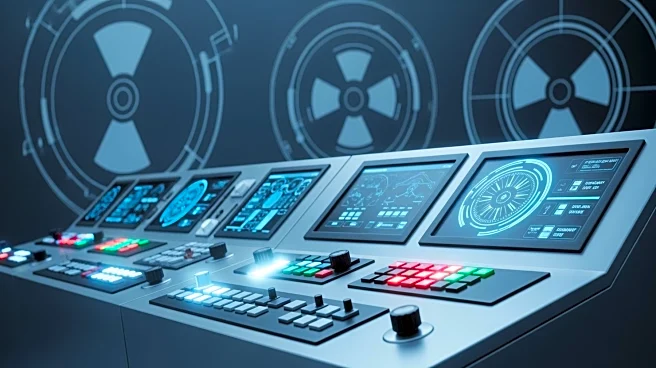
Yokogawa design, engineer, and install the main control systems for Rolls-Royce's SMR power plants, which are described as the 'central nervous system' of the power stations. The work will primarily be conducted from Yokogawa's UK office, with additional contributions from the Czech Republic and the Netherlands. This collaboration is expected to bolster the UK's nuclear supply chain and create jobs in regions where the first plants will be built. Rolls-Royce SMR has been selected as the preferred bidder by Great British Energy–Nuclear to build the UK's first SMRs at Wylfa on Anglesey, a project anticipated to deliver up to 1.5 GW of low-carbon generation and create 8,000 long-term jobs.
Why It's Important?
The partnership between Rolls-Royce SMR and Yokogawa is significant as it represents a major step in the deployment of small modular reactors, which are seen as a key component in the transition to low-carbon energy. The development of SMRs is expected to contribute to energy security and job creation, particularly in the UK and Czech Republic. By securing a world-class supplier like Yokogawa, Rolls-Royce SMR is positioning itself to lead in the emerging SMR market, which could have a substantial impact on global energy production and carbon reduction efforts. The collaboration also highlights the importance of international partnerships in advancing nuclear technology and addressing climate change.
What's Next?
As the project progresses, Rolls-Royce SMR will continue to expand its project pipeline, with plans to deploy SMRs in the Czech Republic and potentially in Sweden. The success of these initial projects could pave the way for further international expansion and the establishment of a global SMR fleet. Stakeholders, including governments and energy companies, will likely monitor the project's progress closely, as it could influence future energy policies and investments in nuclear technology.