
What's Happening?
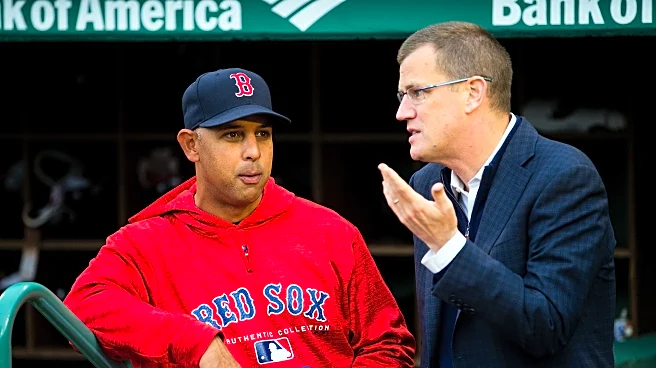
Boston Red Sox CEO Sam Kennedy has addressed growing concerns among fans regarding the team's commitment to winning. Over recent years, the relationship between the Red Sox ownership and its fan base has been strained, particularly following the trade of Mookie Betts in 2020 and subsequent last-place finishes. Fans have expressed dissatisfaction with the team's spending compared to other major league teams like the Los Angeles Dodgers and New York Mets. Kennedy acknowledged the frustration stemming from the perception that the ownership lacks passion for winning, a narrative he finds particularly hurtful. He emphasized that the team's projected collective bargaining tax payroll for the season is approximately $267 million, the highest in franchise
history, although still significantly less than the Dodgers. Kennedy insists that the ownership is committed to providing the necessary resources for the team's success.
Why It's Important?
The concerns raised by Red Sox fans highlight the broader issue of team management and financial strategy in Major League Baseball. The perception of a lack of commitment to winning can impact fan loyalty and attendance, which are crucial for a team's financial health. The Red Sox's spending strategy, particularly in comparison to high-spending teams like the Dodgers, raises questions about competitive balance and the effectiveness of financial investments in achieving on-field success. The team's ability to address these concerns and improve performance could influence its standing in the league and its relationship with its fan base. The situation underscores the importance of transparent communication between sports franchises and their supporters.
What's Next?
The Red Sox will need to demonstrate their commitment to winning through on-field performance to rebuild trust with their fans. This may involve strategic player acquisitions, effective management decisions, and potentially increased spending to compete with top-tier teams. The ownership's response to fan concerns and the team's performance in the upcoming season will be closely watched. Success on the field could alleviate some of the dissatisfaction and reinforce the ownership's claims of commitment to winning. Additionally, the team's financial strategies and player contract decisions will be scrutinized as indicators of their dedication to building a competitive team.