




What's Happening?
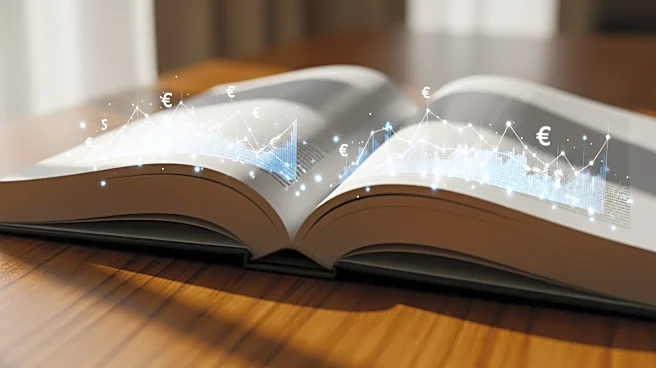
NPR's 'Planet Money,' a well-regarded economics podcast, has expanded its educational reach with the release of a new book titled 'Planet Money: A Guide to the Economic Forces That Shape Your Life.' The podcast, which began during the 2008 financial crisis,
has been a consistent source of economic insights, branching out into various media forms including a comic book series and a TikTok channel. The new book aims to further demystify the complex economic dynamics that influence everyday life. Kevin Malone, one of the podcast's hosts, and Alex Mayyasi, a contributor and the book's author, discussed the book's themes and objectives in an interview with Hawaii Public Radio. The book is positioned as a resource for understanding how global and national economic events, such as the Iran War's impact on fuel prices and tariff uncertainties affecting local businesses, resonate in personal and community contexts.
Why It's Important?
The release of 'Planet Money: A Guide to the Economic Forces That Shape Your Life' is significant as it provides a comprehensive resource for individuals seeking to understand the economic factors that affect their daily lives. In a time of global economic uncertainty, with issues like fluctuating fuel prices and trade tensions impacting local economies, this book offers valuable insights into how these macroeconomic trends translate into real-world consequences. By making complex economic concepts accessible, the book empowers readers to make informed decisions and better navigate the economic landscape. This is particularly relevant for communities like Hawaii, where economic shifts can have pronounced effects on tourism and local businesses. The book's release underscores the importance of economic literacy in fostering resilience and adaptability in the face of economic challenges.
What's Next?
Following the release of the book, NPR's 'Planet Money' is likely to continue its mission of economic education through various platforms. The book may serve as a catalyst for further discussions and educational initiatives aimed at enhancing public understanding of economic issues. As readers engage with the book, there may be increased demand for more in-depth analyses and discussions on specific economic topics, potentially leading to new podcast episodes or supplementary materials. Additionally, the book's insights could influence public discourse on economic policy and personal finance, encouraging individuals and policymakers to consider the broader implications of economic decisions. The ongoing engagement with economic education suggests a continued effort to equip the public with the knowledge needed to navigate an increasingly complex economic environment.