


What's Happening?
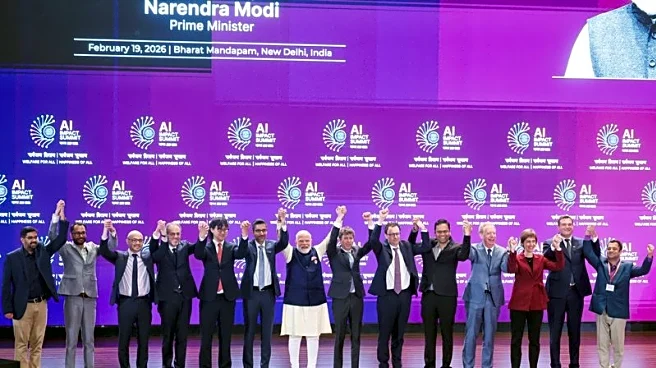
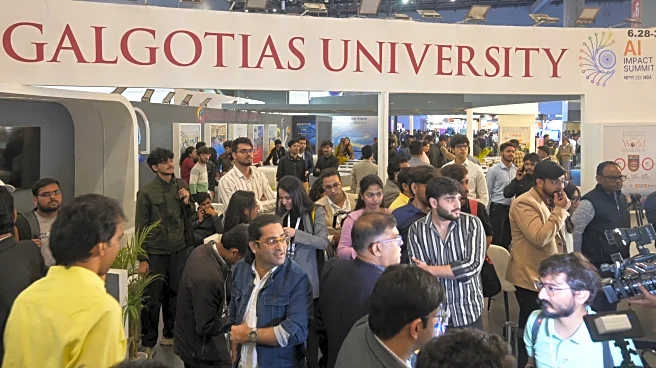
OpenAI CEO Sam Altman has highlighted the phenomenon of 'AI washing,' where companies falsely attribute layoffs to the impact of artificial intelligence. Speaking at the India AI Impact Summit, Altman noted that while some companies are using AI as a scapegoat for workforce reductions, genuine job displacement due to AI is anticipated. This comes amidst mixed data on AI's impact on employment, with a National Bureau of Economic Research study indicating that 90% of surveyed executives reported no AI-related job losses in recent years. However, tech leaders like Anthropic CEO Dario Amodei predict significant job losses, particularly in entry-level positions, due to AI advancements. Altman expects AI to create new job roles, as has been the case
with past technological revolutions.
Why It's Important?
The discussion around 'AI washing' and job displacement is crucial as it affects workforce dynamics and economic stability. Companies may use AI as a convenient excuse for layoffs, potentially masking underlying business issues. This could lead to a lack of accountability and transparency in corporate decision-making. On the other hand, genuine AI-driven job displacement could reshape the labor market, necessitating new skills and roles. This transition could benefit those who adapt, but it may also disadvantage workers in roles susceptible to automation. The broader economic implications include potential shifts in productivity and employment patterns, influencing policy decisions and workforce development strategies.
What's Next?
As AI technology continues to evolve, companies and policymakers will need to address the dual challenges of 'AI washing' and actual job displacement. Businesses may face pressure to justify AI investments and their impact on employment. Policymakers might need to consider regulations to ensure transparency and accountability in corporate practices related to AI. Additionally, workforce development programs may be necessary to equip workers with skills for emerging roles. The ongoing debate and data collection on AI's impact will likely shape future economic and labor policies.
Beyond the Headlines
The ethical implications of 'AI washing' raise questions about corporate responsibility and the transparency of business practices. If companies continue to misattribute layoffs to AI, it could erode trust between employers and employees, as well as between businesses and consumers. Furthermore, the potential for AI to create new job opportunities highlights the need for a proactive approach to education and training, ensuring that the workforce is prepared for the technological shifts ahead. This situation underscores the importance of balancing innovation with ethical considerations in the corporate world.