
What's Happening?
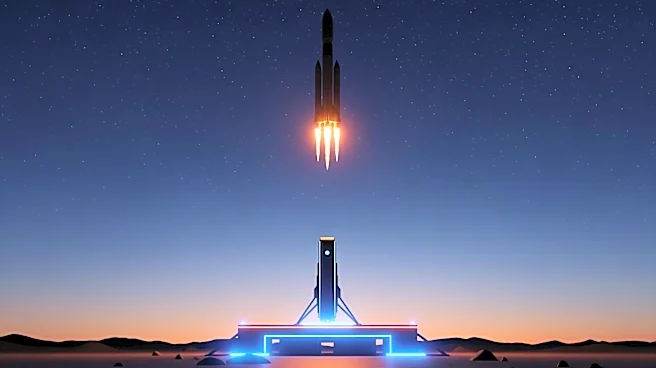
SpaceX launched a Falcon 9 rocket from Vandenberg Space Force Base in California, carrying 25 Starlink satellites. The launch occurred at 9:29 p.m. PDT and was part of SpaceX's 46th Falcon 9 mission of the
year. The rocket's first stage, Booster B1082, successfully landed on the drone ship 'Of Course I Still Love You' in the Pacific Ocean. This mission is part of SpaceX's ongoing efforts to expand its Starlink internet service, which aims to provide global broadband coverage. The satellites were deployed into a low Earth orbit with a 97-degree inclination, enhancing the existing Starlink constellation.
Why It's Important?
This launch is a testament to SpaceX's operational efficiency and its commitment to expanding the Starlink network. By increasing the number of satellites in orbit, SpaceX aims to improve internet connectivity worldwide, particularly in areas lacking reliable service. The successful reuse of the Falcon 9 booster underscores SpaceX's advancements in reducing launch costs, which could have significant implications for the space industry. The expansion of the Starlink network also positions SpaceX as a major player in the satellite internet market, potentially impacting competitors and influencing global internet infrastructure.
What's Next?
SpaceX is likely to continue its rapid launch cadence to further build out the Starlink constellation. The company may also focus on enhancing the performance and reliability of its internet service as more satellites are deployed. Future launches will be closely watched by industry stakeholders, including potential investors, as SpaceX considers an IPO. The success of these missions could bolster confidence in SpaceX's business model and its ability to deliver on ambitious space projects.