
What's Happening?
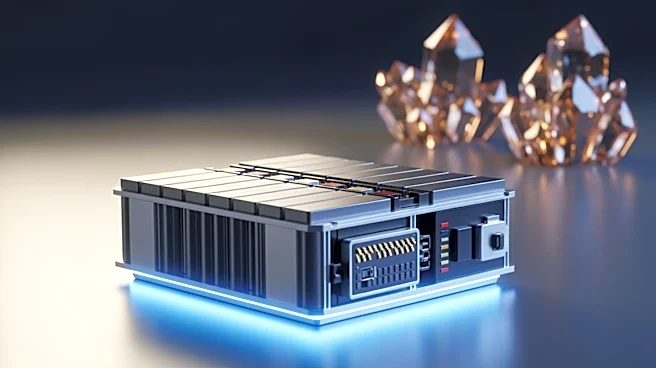
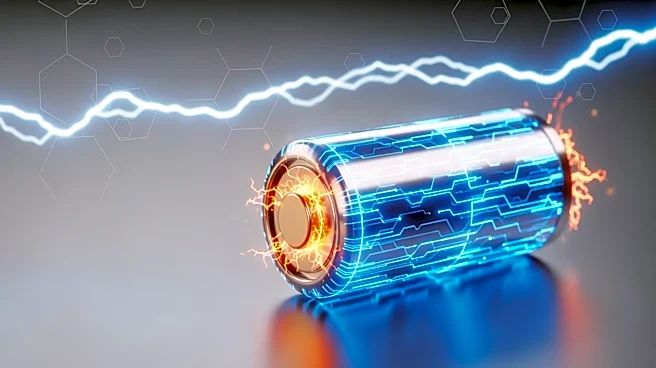
Gotion, a Chinese company backed by Volkswagen Group, has announced the production of new sodium-ion batteries with an energy density of up to 261 Wh/kg. These batteries, introduced at the 15th Global
Technology conference, are designed for various applications, including light electric vehicles and drones. Gotion has developed three versions of these batteries: a high-energy version for weight-sensitive applications, a power version for cold weather performance, and an energy storage version with a long cycle life. The company has established gigawatt-hour scale production lines in Tangshan and Hefei, China. Despite their potential, these batteries are not yet intended for electric vehicle applications.
Why It's Important?
The introduction of sodium-ion batteries by Gotion represents a significant advancement in battery technology, offering a lower-cost alternative to lithium-ion batteries. These batteries reduce the risk of fires and require less thermal management, making them attractive for various industries. The development of sodium-ion batteries could impact the energy storage market and potentially the electric vehicle sector in the future. However, Gotion's plans to expand into the U.S. market have faced resistance, highlighting geopolitical tensions and concerns over foreign investments in critical industries.
What's Next?
While Gotion's sodium-ion batteries are not yet slated for use in electric vehicles, the rapid development of this technology suggests potential future applications in the automotive industry. Volkswagen's backing of Gotion indicates a strategic interest in integrating these batteries into its electric vehicles. As the technology matures, sodium-ion batteries could become a dominant force in the transportation sector, challenging the current lithium-ion battery market.
Beyond the Headlines
The resistance to Gotion's expansion into the U.S. underscores broader geopolitical and economic tensions. The reluctance to accept foreign-owned companies in critical sectors like energy storage reflects national security concerns and economic protectionism. This situation highlights the challenges of balancing technological advancement with national interests in a globalized economy.