







What's Happening?
Oil prices have experienced a slight increase as investors express skepticism about the potential for a breakthrough in peace talks between the United States and Iran. Despite the rise, oil prices are still on track for a weekly loss. Brent crude futures
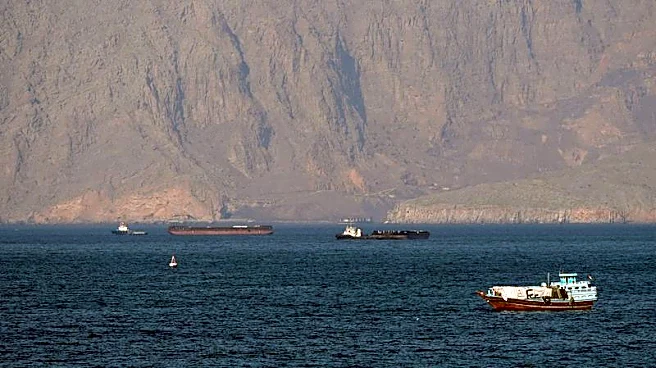
increased by $1.17, reaching $103.75 per barrel, while U.S. West Texas Intermediate futures rose by 52 cents to $96.87. The market has been volatile, with prices fluctuating due to shifting expectations regarding a peace deal. The ongoing conflict has significantly disrupted oil flows through the Strait of Hormuz, a critical passage for global energy supplies, leading to a depletion of global oil inventories. Efforts to end the conflict have shown limited progress, and the market remains uncertain about when oil supply flows might return to normal.
Why It's Important?
The rise in oil prices amid doubts over US-Iran peace talks has significant implications for the global economy. The disruption of oil flows through the Strait of Hormuz, which previously accounted for 20% of global energy supplies, has removed 14 million barrels per day from the market. This has contributed to concerns about inflation and the economic outlook. The uncertainty surrounding the peace talks and the potential for a prolonged conflict could lead to further volatility in oil prices, impacting industries reliant on stable energy costs. Additionally, the depletion of global oil inventories poses a risk to energy security, potentially affecting countries dependent on oil imports.
What's Next?
The future of oil prices and global supply largely depends on the outcome of the US-Iran peace talks. While there are some positive signs, such as the narrowing of gaps between the two countries, significant divisions remain, particularly regarding Tehran's uranium stockpile and control of the Strait of Hormuz. A Qatari negotiating team has arrived in Tehran to assist in securing a deal, but the timeline for a resolution remains uncertain. If a peace agreement is reached, it could lead to a gradual normalization of oil flows, although full restoration is not expected before the first or second quarter of 2027. In the meantime, the market will continue to react to developments in the negotiations and the broader geopolitical landscape.