







What's Happening?
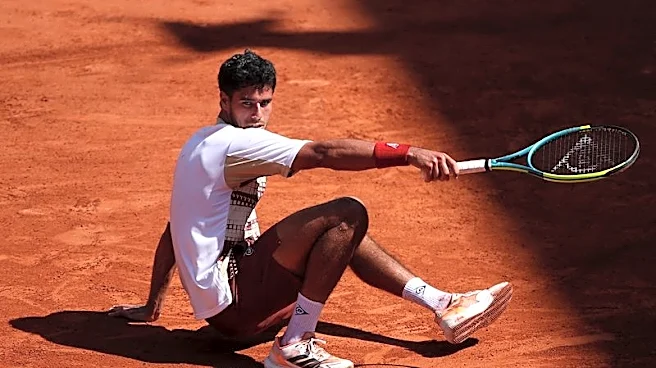
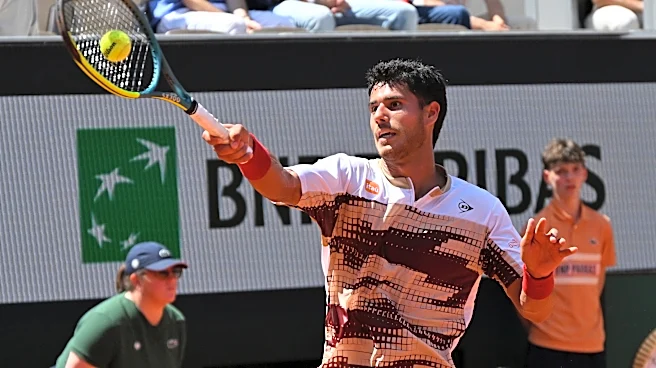
Adolfo Daniel Vallejo, a tennis player from Paraguay, is facing a significant fine for making sexist remarks following his loss at the French Open. Vallejo lost a five-set match to French teenager Moise Kouame and subsequently criticized the female umpire,
Ana Carvalho from Brazil, stating that such matches should be officiated by men. The French Tennis Federation and Roland Garros organizers condemned Vallejo's comments as unacceptable, emphasizing that an umpire's competence is based on professionalism, not gender. Vallejo's remarks came after he claimed the umpire failed to control the boisterous French crowd, which he felt favored his opponent. The organizers have announced a fine, though the amount has not been disclosed. Players reaching the second round of the French Open typically receive 130,000 euros ($151,000).
Why It's Important?
This incident highlights ongoing issues of sexism in sports, particularly in tennis, where gender equality has been a significant topic. Vallejo's comments undermine the professionalism of female officials and perpetuate stereotypes about gender roles in sports. The response from the French Tennis Federation and Roland Garros organizers underscores the importance of addressing such behavior to promote inclusivity and respect in the sport. The fine serves as a deterrent against similar future incidents and reinforces the message that sexist remarks will not be tolerated. This situation also brings attention to the challenges female officials face in male-dominated sports environments.
What's Next?
The fine imposed on Vallejo is expected to be a significant financial penalty, though the exact amount remains undisclosed. The incident may prompt further discussions within the tennis community about the treatment of female officials and the need for stricter enforcement of conduct codes. It could also lead to increased support and training for umpires to handle challenging match environments. The broader tennis community, including players and officials, may engage in dialogue to address and prevent sexism in the sport, potentially leading to policy changes or initiatives aimed at promoting gender equality.
Beyond the Headlines
Vallejo's remarks and the subsequent fine could have long-term implications for his career, affecting his reputation and relationships within the tennis community. The incident may also influence how sponsors and fans perceive him, potentially impacting his marketability. On a broader scale, this situation could contribute to a cultural shift in sports, encouraging more robust support for female officials and greater awareness of gender issues. It may also inspire other sports organizations to review their policies and take proactive measures to ensure a respectful and inclusive environment for all participants.