




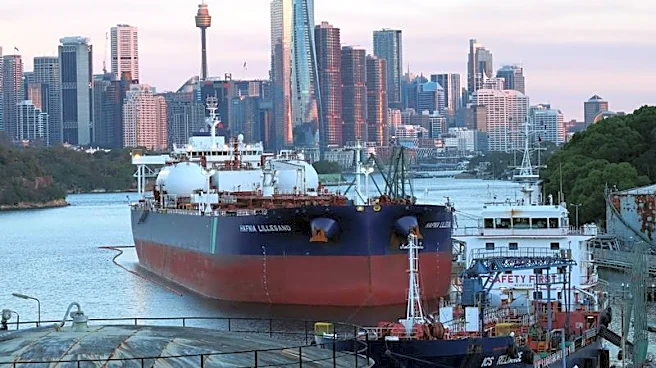


What's Happening?
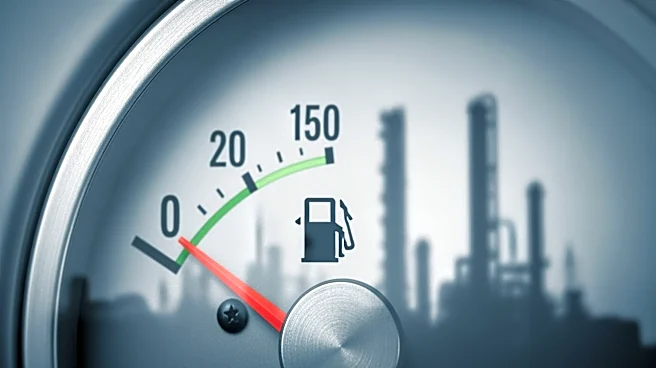
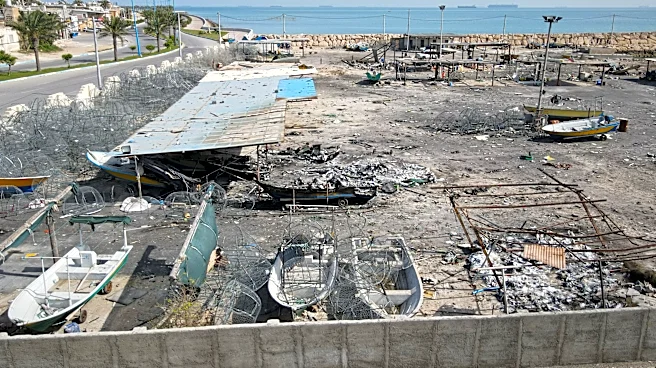
Despite the United States being a net exporter of oil, gas prices have been rising due to the interconnected nature of the global oil market. The ongoing conflict in the Middle East has significantly impacted oil prices worldwide, including in the U.S.
The oil market operates as a global commodity, with prices fluctuating based on international events. The current crisis has led to increased demand and higher prices, which are passed down to consumers. Additionally, many U.S. refineries are designed to process heavy crude oil from foreign sources, not the lighter crude produced domestically, further complicating the situation.
Why It's Important?
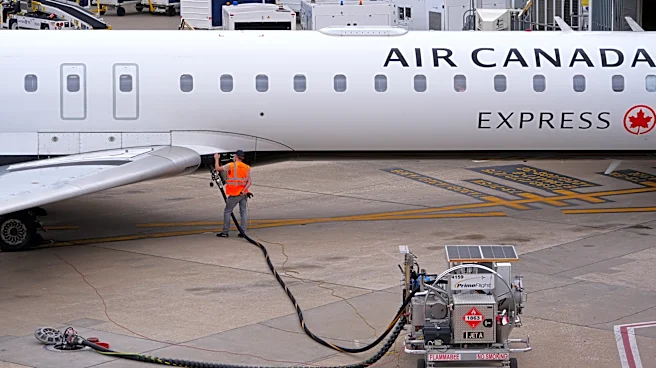
The rise in gas prices affects various sectors of the U.S. economy, from transportation to consumer goods, as increased fuel costs are often transferred to consumers. This situation highlights the vulnerability of the U.S. to global oil market fluctuations despite its energy independence. The economic principle of 'Rockets and Feathers' suggests that while gas prices rise quickly, they fall slowly, prolonging the economic impact on American consumers and businesses. The reliance on foreign oil for certain refinery processes underscores the need for potential infrastructure investments to adapt to domestic oil production capabilities.
What's Next?
The U.S. may need to consider strategic investments in refinery infrastructure to better process domestic oil, reducing dependency on foreign oil. Additionally, the government and industry stakeholders might explore alternative energy sources to mitigate the impact of global oil market volatility. Monitoring geopolitical developments in the Middle East will be crucial, as further escalations could lead to additional price hikes and economic disruptions.