








What's Happening?
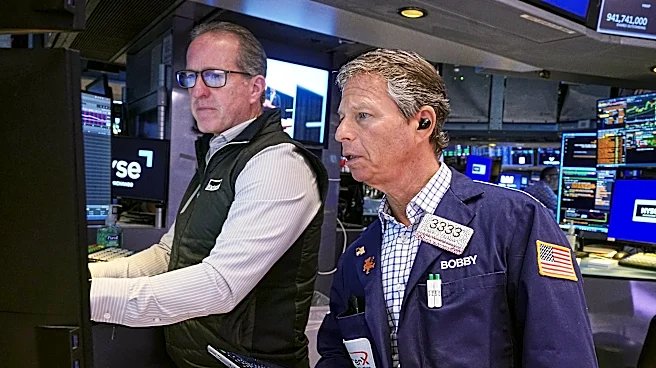
Global stock markets have experienced a decline following a U.S. military strike on Iran and reports of missile attacks in the Gulf region. The tensions have affected investor confidence, leading to a drop in stock prices and a rise in oil prices. Brent
crude has increased by 2.7%, reflecting concerns over potential disruptions in oil supply through the Strait of Hormuz. The escalation has also impacted bond markets, with yields on 10-year Treasury notes rising. The situation has cooled a recent tech-led rally in stock markets, which had pushed global indexes to record highs. The developments come as the U.S. Federal Reserve prepares to release inflation data, which could influence future monetary policy decisions.
Why It's Important?
The current geopolitical tensions in the Gulf region have significant implications for global financial markets and economic stability. The rise in oil prices could exacerbate inflationary pressures, affecting consumer prices and economic growth. The uncertainty surrounding the situation may lead to increased volatility in stock and bond markets, impacting investors and financial institutions. The Federal Reserve's response to inflation data will be closely watched, as it could signal changes in interest rates and monetary policy. The situation highlights the interconnectedness of global markets and the potential for geopolitical events to influence economic conditions worldwide.
What's Next?
Investors and policymakers will be closely monitoring developments in the Gulf region and their impact on global markets. The upcoming release of U.S. inflation data will be a key focus, as it could influence the Federal Reserve's monetary policy decisions. Any further escalation in the Gulf could lead to additional market volatility and impact global economic growth. The situation underscores the need for diplomatic efforts to de-escalate tensions and ensure stability in the region, which is crucial for maintaining confidence in global markets.