
What's Happening?
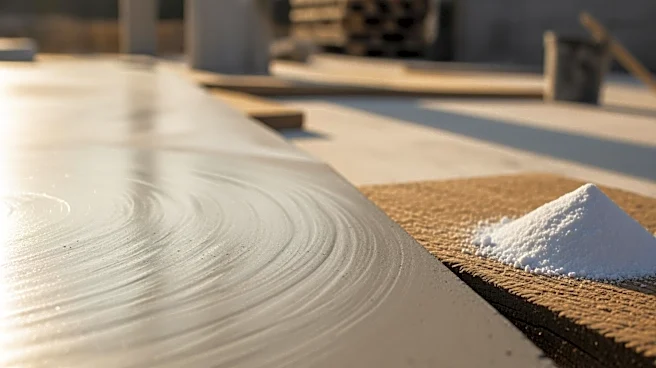
Recent research has demonstrated that metakaolin-enhanced concrete significantly improves the strength, density, and durability of construction materials while reducing cement usage. This approach utilizes
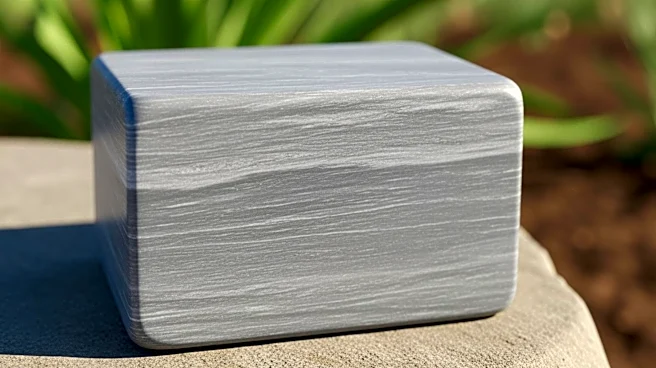
industrial waste to create eco-friendly materials for modern infrastructure. The study, published in Scientific Reports, explored the mechanical and microstructural properties of self-compacting concrete (SCC) using ternary blends of mineral powders, including metakaolin, high-calcium fly ash, and waste marble powder. The findings indicate that a 12.5% replacement of metakaolin enhances the material's elastic modulus and internal density, offering a sustainable alternative to traditional concrete.
Why It's Important?
The construction industry is a major contributor to global carbon emissions, and innovations like metakaolin-enhanced concrete offer a pathway to more sustainable building practices. By reducing the reliance on traditional cement, which is a significant source of CO2 emissions, this technology supports the development of environmentally friendly infrastructure. The use of industrial by-products not only addresses waste management issues but also conserves natural resources, aligning with global efforts to mitigate climate change.
What's Next?
The adoption of metakaolin-enhanced concrete could lead to widespread changes in construction practices, particularly in high-rise buildings, dams, and complex structures where traditional methods are challenging. Future research may focus on long-term performance, including creep and shrinkage behavior, to further validate the material's suitability for large-scale applications. As the industry moves towards carbon-neutral infrastructure, the integration of such sustainable materials will be crucial.