



What's Happening?
The U.S. labor market showed signs of stability as the number of Americans filing new applications for unemployment benefits remained unchanged at a seasonally adjusted 213,000 for the week ending February 28, according to the Labor Department. This figure
aligns with economists' expectations, who had forecasted 215,000 claims. Additionally, a report from Challenger, Gray & Christmas indicated a significant decline in layoffs, with U.S.-based employers announcing 48,307 job cuts in February, marking a 55% decrease from January and a 72% drop from the previous year. Despite these positive indicators, the number of people receiving unemployment benefits after an initial week of aid rose by 46,000 to 1.868 million, suggesting some challenges in hiring.
Why It's Important?
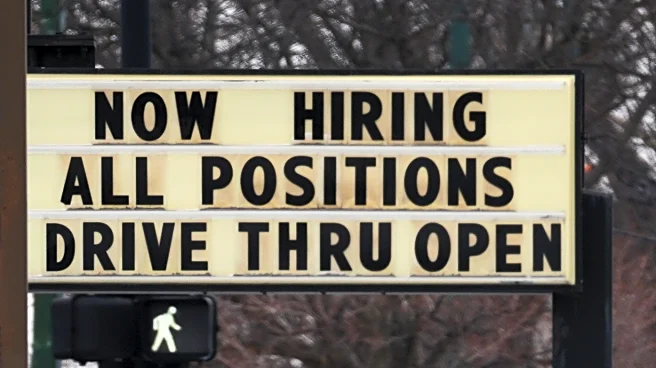
The stability in jobless claims and the sharp decline in layoffs are positive signs for the U.S. labor market, indicating resilience despite economic uncertainties. The labor market's recovery is crucial for economic growth, as it affects consumer spending and overall economic confidence. The reduction in layoffs suggests that businesses are regaining confidence, potentially leading to increased hiring and investment. However, the rise in continued unemployment claims highlights ongoing challenges, particularly for those experiencing long-term unemployment. The labor market's performance is also influenced by broader economic policies, such as tax cuts and tariffs, which can impact business decisions and economic stability.
What's Next?
Economists are optimistic that the labor market will continue to gain momentum throughout the year, supported by tax cuts that are expected to stimulate demand. The upcoming employment report, which is not influenced by the current claims data, is anticipated to show an increase in nonfarm payrolls by 59,000 jobs in February. The unemployment rate is expected to remain steady at 4.3%. As the labor market stabilizes, businesses may increase hiring, although challenges such as rising nonlabor input costs and economic uncertainties could temper growth. The Federal Reserve's Beige Book report noted stable employment levels, but highlighted concerns about softer demand and economic conditions.