



What's Happening?
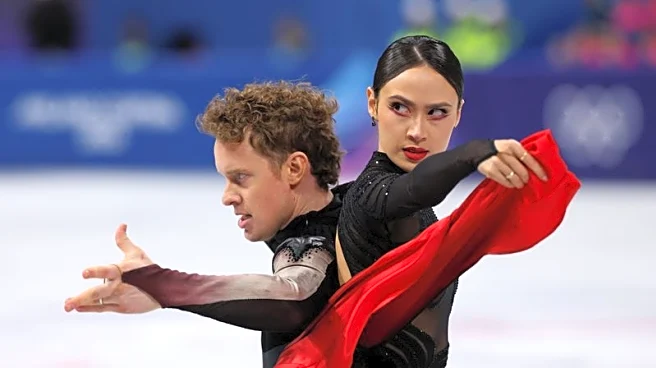
The 'kiss and cry' area in figure skating, where athletes await their scores, is under scrutiny for its impact on mental health. This tradition, which showcases athletes' emotional reactions, has been criticized for its voyeuristic nature, especially when scores are disappointing. The International Skating Union (ISU) has introduced new elements like the 'hot seat' and 'podium box' to increase drama, but concerns remain about the mental health of skaters, particularly younger athletes.
Why It's Important?
The debate over the 'kiss and cry' area reflects broader concerns about the mental health of athletes and the ethical implications of publicizing their emotional responses. As mental health becomes a priority in sports, the figure skating community is challenged
to balance entertainment value with the well-being of its athletes. This discussion is part of a larger movement to safeguard young athletes and ensure that sports practices do not contribute to mental health issues.
Beyond the Headlines
The scrutiny of the 'kiss and cry' area highlights the need for sports organizations to consider the psychological impact of their traditions and practices. It raises questions about the role of media in sports and the responsibility of organizations to protect athletes from undue stress and public exposure. The conversation may lead to changes in how scores are presented and how athletes are supported during competitions.