






What's Happening?
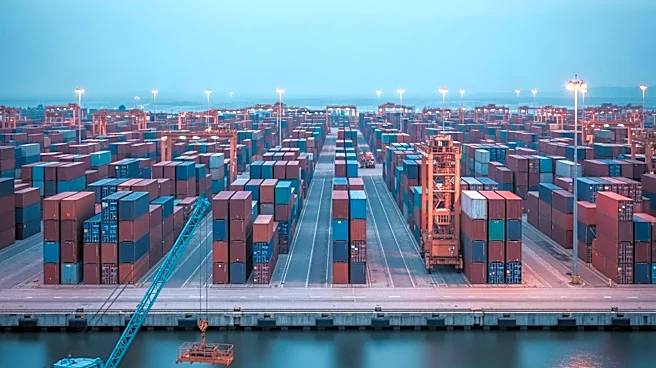
The National Retail Federation (NRF) has reported that import volumes at major U.S. container ports are expected to remain below last year's levels into early fall. This trend is attributed to ongoing geopolitical tensions, particularly the conflict in Iran,
which has led to increased costs and operational challenges. According to the Global Port Tracker report, inbound cargo volume is projected to see a year-over-year increase in May and June due to a low comparison base from the previous year. However, declines are expected from July through September. The report highlights that inflation and falling consumer confidence are contributing to the overall trend of lower imports.
Why It's Important?
The decline in import volumes has significant implications for the U.S. economy, particularly for retailers and supply chain stakeholders. Lower import volumes can lead to reduced availability of goods, potentially impacting retail sales and consumer choice. The geopolitical tensions and resulting economic uncertainty are causing businesses to adopt more flexible and diversified sourcing strategies to mitigate risks. This situation underscores the importance of adaptability in global supply chains and the need for businesses to manage costs effectively amid rising inflation and tariff uncertainties.
What's Next?
As geopolitical tensions persist, businesses are likely to continue facing challenges in managing supply chain disruptions. The NRF's projections suggest that import volumes will remain subdued, which could lead to further adjustments in inventory management and sourcing strategies. Stakeholders in the retail and logistics sectors will need to monitor developments closely and adapt to changing conditions to maintain supply chain resilience.