




What's Happening?
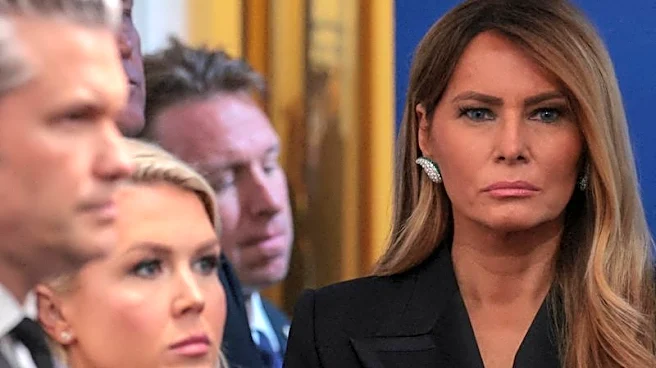
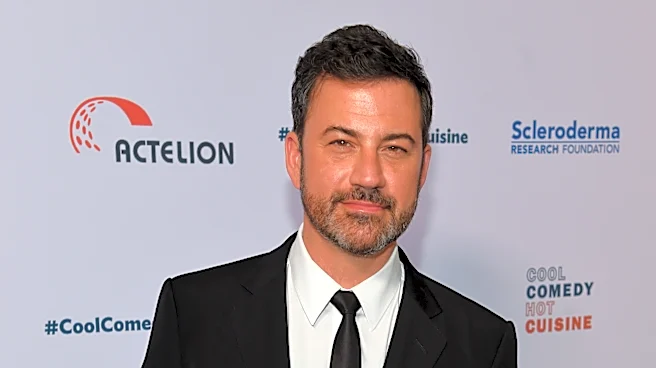
Late-night host Jimmy Kimmel has responded to calls from the White House for his dismissal following a joke he made about First Lady Melania Trump. The controversy arose after Kimmel's segment on 'Jimmy Kimmel Live!' where he made a joke referring to Melania Trump as having
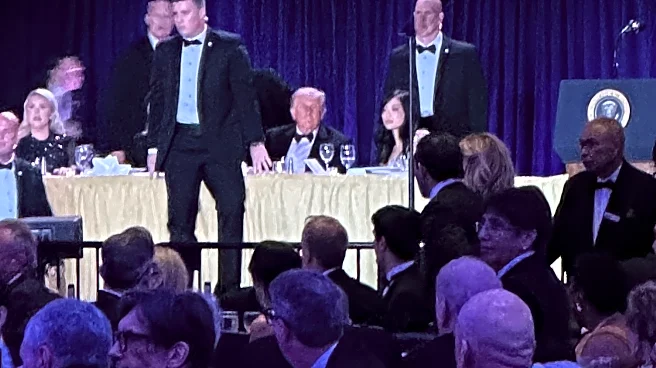
'a glow like an expectant widow,' which was part of a roast traditionally performed at the White House Correspondents' Association dinner. The First Lady criticized Kimmel's remarks on social media, labeling them as 'hateful and violent rhetoric.' In response, President Trump demanded Kimmel's firing from Disney and ABC. Kimmel addressed the situation on his show, suggesting that the First Lady should discuss 'violent rhetoric' with President Trump himself. This incident follows a previous backlash Kimmel faced over comments related to a fatal shooting involving conservative activist Charlie Kirk.
Why It's Important?
This incident highlights the ongoing tensions between media figures and political leaders, particularly in the context of freedom of speech and the boundaries of comedic expression. The call for Kimmel's firing underscores the sensitivity of political figures to public criticism and the potential repercussions for media personalities who engage in satire. The situation also reflects broader societal debates about the role of humor in political discourse and the responsibilities of media companies in moderating content. The outcome of this controversy could influence how networks handle similar situations in the future, potentially affecting the landscape of late-night television and its role in political commentary.
What's Next?
The controversy may lead to further discussions within Disney and ABC regarding their stance on content moderation and the boundaries of comedic expression. It is possible that the network will review its policies to address similar situations in the future. Additionally, the incident could prompt reactions from other media personalities and political figures, potentially sparking a broader debate about the role of satire in political discourse. The public's response to the situation may also influence how networks and advertisers approach content that involves political figures.