



What's Happening?
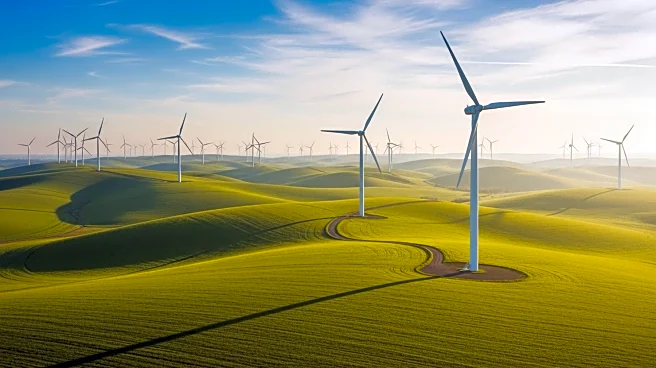
The United States has the potential to significantly increase its wind energy capacity by repowering existing wind farms. Repowering involves replacing older turbines with newer, more efficient models, which can enhance capacity without the need for additional
land. According to a study, repowering could add 161 gigawatts to the current capacity, more than doubling it. This approach is seen as a cost-effective way to boost renewable energy output, as it avoids the complexities and expenses associated with acquiring new land and permits. The Mount Storm wind farm in West Virginia serves as an example, where a repowering project increased capacity while reducing the number of turbines.
Why It's Important?
Repowering existing wind farms presents a significant opportunity for the U.S. to enhance its renewable energy infrastructure. By increasing capacity without expanding land use, repowering can accelerate the transition to sustainable energy sources, reducing reliance on fossil fuels. This is particularly important as the U.S. aims to meet its energy demands while addressing environmental concerns. The potential to double wind energy capacity could help the U.S. achieve its renewable energy targets, contributing to a reduction in greenhouse gas emissions and promoting energy independence. The economic benefits include job creation in the renewable energy sector and reduced energy costs for consumers.
What's Next?
The focus on repowering existing wind farms is likely to grow as the U.S. seeks to expand its renewable energy capacity. Policymakers and industry leaders will need to address regulatory and social challenges associated with repowering projects. Collaboration with local communities and stakeholders will be essential to ensure successful implementation. As the energy transition continues, the role of wind energy in the U.S. energy mix is expected to increase, with repowering playing a key role in achieving sustainability goals.