


What's Happening?
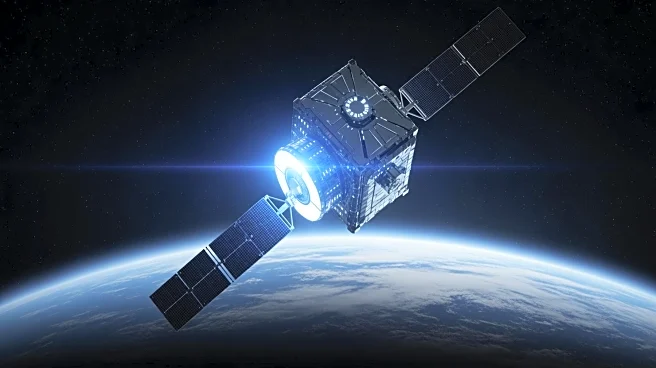
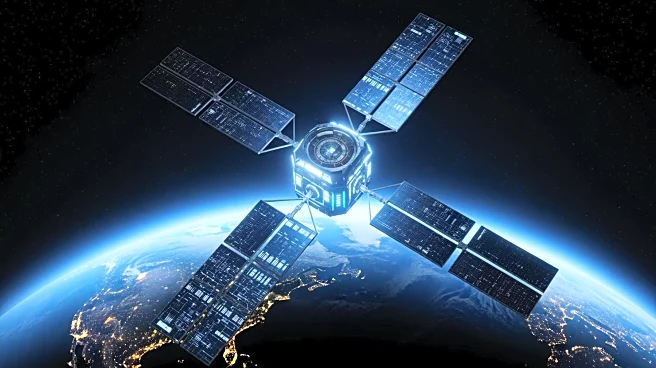
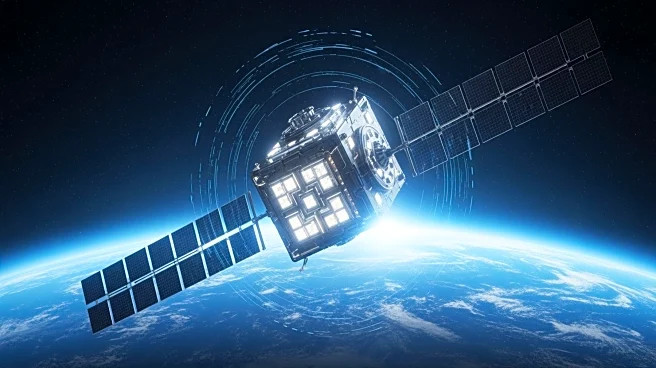
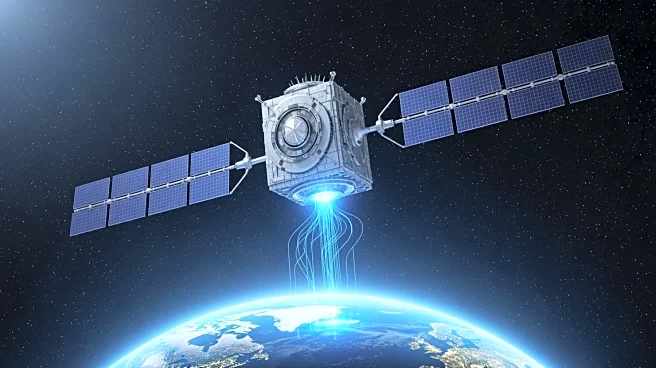
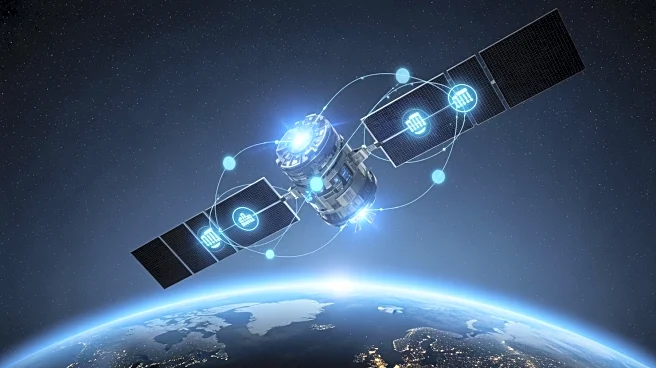
Starcloud, a startup based in Redmond, Washington, has successfully raised $170 million in a Series A funding round led by Benchmark and EQT Ventures, valuing the company at $1.1 billion. The company is pioneering the development of data centers in orbit,
with the goal of making them cost-competitive with terrestrial facilities. Starcloud has already launched a satellite equipped with an Nvidia H100 GPU, marking the first AI model training in space. The funding will support the launch of Starcloud-2, a more advanced satellite, and the development of Starcloud-3, a spacecraft designed to compete with terrestrial data centers on cost. The company plans to leverage the advantages of space, such as unlimited solar power and passive cooling, to achieve its goals.
Why It's Important?
The development of orbital data centers by Starcloud represents a significant shift in the data storage and processing industry. By moving data centers to space, the company aims to overcome terrestrial limitations such as land acquisition and cooling requirements. This innovation could lead to reduced costs and increased efficiency in data processing. The success of Starcloud's initiative could pave the way for other companies to explore similar ventures, potentially transforming the landscape of data infrastructure. Additionally, the project highlights the growing interest and investment in space-based technologies, which could have far-reaching implications for industries reliant on data processing and storage.
What's Next?
Starcloud plans to launch Starcloud-2 in October 2026, featuring multiple GPUs and a bitcoin mining computer. The company is also developing Starcloud-3, which is expected to be the first orbital data center to compete with terrestrial facilities on cost. The success of these projects depends on the reduction of commercial launch costs, particularly with SpaceX's Starship. If Starship access is delayed, Starcloud will continue using Falcon 9 for smaller satellite launches. The company aims to establish a large satellite constellation, assuming future technological advancements and cost reductions.