






What's Happening?
Pi Network, a digital ecosystem known for its mobile-first approach to cryptocurrency mining, is gaining attention for its focus on user accessibility and identity verification. Unlike many blockchain projects, Pi Network emphasizes creating a network
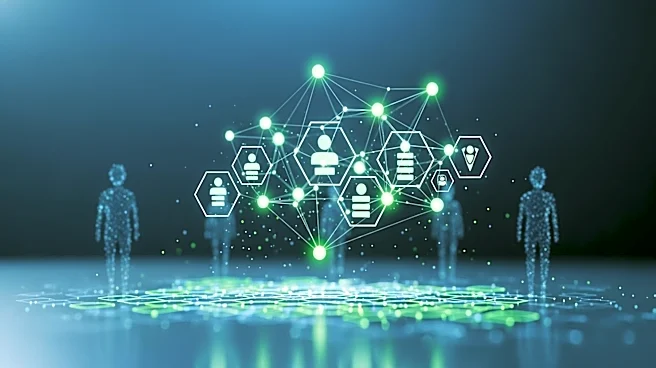
of verified users who can contribute data and insights at scale. This approach positions Pi Network as a potential bridge between blockchain technology and AI development. By leveraging a vast pool of real, verified users, Pi Network aims to improve the reliability and trustworthiness of AI training datasets. This could democratize access to the AI economy, allowing people in underserved regions to participate and benefit from technological advancements.
Why It's Important?
The integration of Pi Network's verified user base with AI systems could address a critical challenge in AI development: data integrity. Current AI models often struggle with low-quality or manipulated data. By ensuring contributions come from authenticated users, Pi Network could significantly enhance the reliability of AI training datasets. This model could also foster economic inclusion by rewarding participants with digital assets like Picoin. The convergence of AI and blockchain represents a compelling direction for digital innovation, potentially leading to a decentralized AI workforce that reshapes how intelligent systems are built and who benefits from the AI revolution.
What's Next?
The realization of this vision depends on technological development, user adoption, and market dynamics. For Pi Network to succeed, it must offer clear incentives and tangible benefits to its users. The integration of blockchain and AI also raises questions about scalability, governance, and ethical considerations. Policymakers will need to address issues such as data ownership and the ethical use of AI. Despite these challenges, the potential benefits of a decentralized AI workforce are significant, offering a more equitable distribution of value among contributors.