








What's Happening?
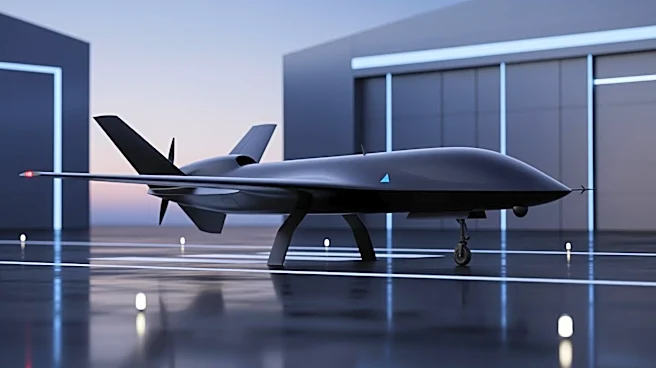
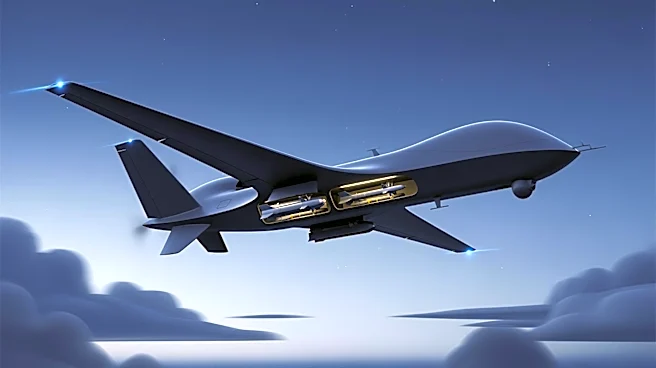
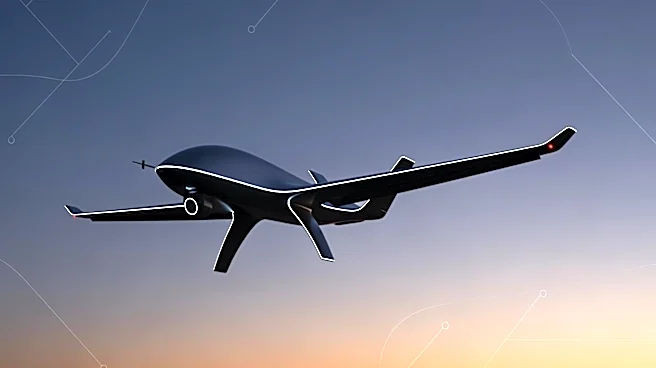
Boeing has unveiled significant updates to its MQ-28 Ghost Bat collaborative combat aircraft (CCA) at the ILA Berlin air show. The enhancements include a 25% increase in wing area, which allows for greater fuel and payload capacity. The aircraft will
now feature two additional weapons bays and three external weapons stations, enabling it to carry more advanced munitions such as the Raytheon AIM-120 AMRAAM and small diameter bombs. These updates are part of a broader effort to improve the aircraft's stealth capabilities and operational flexibility. Boeing has also expanded its German industry team, adding Diehl Defence and Rohde & Schwarz to its existing partnership with Rheinmetall.
Why It's Important?
The enhancements to the MQ-28 Ghost Bat are significant for the defense industry, as they increase the aircraft's lethality and operational range. This development is crucial for countries looking to bolster their air defense capabilities with advanced unmanned systems. The addition of German partners indicates Boeing's strategic move to penetrate the European market, potentially influencing defense procurement decisions in the region. The improvements also reflect a growing trend towards integrating more sophisticated and autonomous systems in military operations, which could reshape future combat strategies.
What's Next?
Boeing plans to continue testing and refining the MQ-28 Ghost Bat, with the Block 3 version expected to enter service soon. The company is also in discussions with potential international buyers, including Germany, which could lead to significant export opportunities. As the aircraft's capabilities are further validated, it may attract interest from other allied nations looking to enhance their air combat fleets. The ongoing partnership with the Royal Australian Air Force suggests that additional upgrades and features will be progressively introduced, keeping the MQ-28 at the forefront of unmanned combat aircraft technology.