







What's Happening?
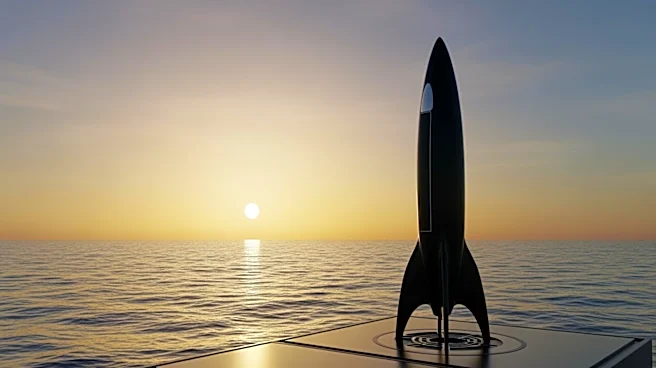
The increasing demand for satellite launches is leading to congestion at U.S. spaceports, prompting renewed interest in sea-based rocket launches. Offshore launch platforms are being considered as a solution to alleviate pressure on traditional launch sites
like Cape Canaveral and Vandenberg. The Defense Innovation Unit has awarded a contract to The Spaceport Company to develop offshore launch infrastructure, highlighting the strategic importance of sea-based platforms. These platforms offer advantages such as reduced airspace disruptions and increased launch flexibility. The U.S. is looking to compete with China, which has already advanced in sea-based launch capabilities.
Why It's Important?
The shift towards sea-based launches could significantly impact the U.S. space industry by increasing launch capacity and reducing reliance on congested land-based sites. This approach offers strategic advantages, including enhanced national security by distributing launch sites and making them less vulnerable to attacks. It also aligns with the Pentagon's emphasis on responsive launch capabilities. The development of sea-based platforms could foster innovation and investment in the space sector, potentially leading to new business opportunities and collaborations.
What's Next?
The Spaceport Company plans to conduct more launches and further develop its offshore infrastructure. As interest in sea-based launches grows, regulatory and logistical challenges will need to be addressed. The success of these initiatives could lead to broader adoption of sea-based platforms, influencing future space policy and industry practices. Companies like Seagate Space are already exploring new designs for offshore platforms, indicating a potential shift in how space launches are conducted.