



What's Happening?
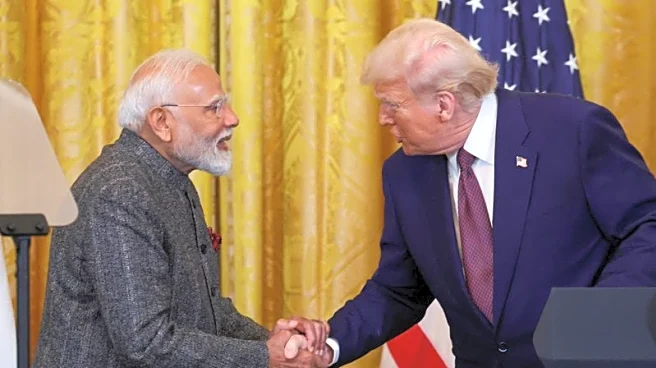
India and the United States have announced a framework for an interim trade agreement aimed at reducing tariffs on Indian goods. This development follows U.S. President Donald Trump's decision to lower import tariffs on India, which were previously increased to pressure New Delhi to reduce its reliance on Russian crude oil. Under the new agreement, tariffs on Indian goods will be reduced from 25% to 18%. The agreement is described as 'reciprocal and mutually beneficial,' with both countries committing to work towards a broader trade deal that will include additional market access commitments and support more resilient supply chains. The framework also outlines that India will eliminate or reduce tariffs on all U.S. industrial goods and a wide
range of food and agricultural products. Indian Prime Minister Narendra Modi has expressed gratitude to President Trump for his commitment to strengthening bilateral ties.
Why It's Important?
The interim trade agreement between India and the United States is significant as it marks a step towards reducing trade barriers and enhancing economic cooperation between the two nations. By lowering tariffs, the agreement is expected to boost trade volumes and create new market opportunities for exporters in both countries. For the U.S., the deal aligns with the Trump administration's goal of increasing American exports and achieving zero tariffs on almost all exports. For India, the agreement opens up a vast market for its goods, potentially leading to increased exports and job creation. However, the deal has faced criticism from Indian opposition parties, who argue that it disproportionately favors the U.S. and could negatively impact sensitive sectors like agriculture. Despite these concerns, the agreement is poised to strengthen economic ties and foster deeper investment and technology partnerships between India and the U.S.
What's Next?
The framework agreement is a precursor to more comprehensive trade negotiations between India and the United States. Both countries have expressed a commitment to formalizing the agreement through further negotiations, which will likely address additional market access and supply chain resilience. As the agreement progresses, stakeholders from various sectors, including agriculture and industry, will be closely monitoring the impact on their respective industries. The Indian government will need to balance the benefits of increased market access with the need to protect domestic industries. Meanwhile, the U.S. will continue to push for greater access to the Indian market for its goods. The outcome of these negotiations will have significant implications for the bilateral trade relationship and could set the stage for future economic cooperation.