
What's Happening?
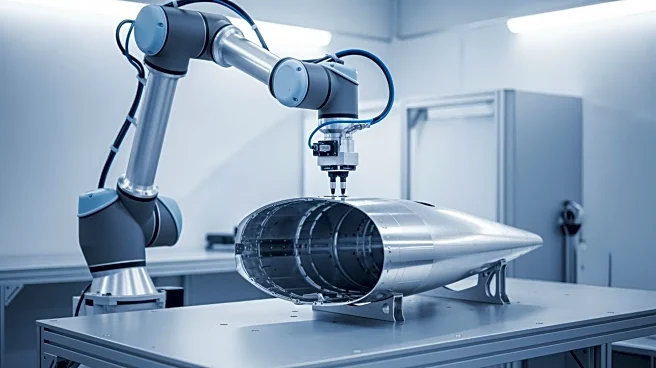
IDEKO, a Basque technology center, has developed a new generation of flexible, sensorised, and connected robotic cells as part of the ROBOCOMP project. This initiative, led by the DANOBAT cooperative,
aims to transform the production of aeronautical components by replacing conventional systems with automated solutions for machining operations on carbon fiber parts. The robotic cells offer greater flexibility and scalability, allowing manufacturers to respond rapidly to changing production demands. The project addresses the dual challenge of achieving net-zero emissions by 2050 while enhancing competitiveness through reduced production costs.
Why It's Important?
The development of these robotic cells is significant for the aerospace industry as it addresses the need for more efficient and sustainable manufacturing processes. By automating critical machining operations, the technology reduces energy consumption and improves production efficiency. This innovation supports the aerospace industry's goals of reducing emissions and production costs, which are essential for maintaining competitiveness in a rapidly evolving market. Additionally, the technology's adaptability to other industries, such as automotive and energy, highlights its potential to drive broader industrial transformation.
Beyond the Headlines
The success of the ROBOCOMP project relies on a robust industrial consortium, including contributions from Airbus and other industry leaders. The project's technologies are transferable to other machining-intensive industries, strengthening the competitiveness of small and medium-sized enterprises. This cross-sector applicability opens opportunities for advanced services and smart maintenance, further enhancing industrial competitiveness and sustainability.