
What's Happening?
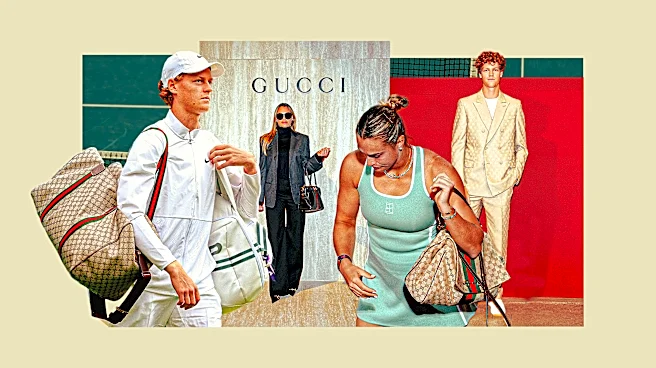
The French Open is experiencing tensions between tennis tournaments and luxury fashion brands such as Gucci and Louis Vuitton. This friction arises from the increasing presence of luxury brand products
on the court, exemplified by Jannik Sinner's use of a Gucci duffel bag at Wimbledon in 2023. The Women's Tennis Association (WTA) has since clarified rules regarding brand appearances on court. Recently, Aryna Sabalenka, the women's No. 1 player, brought a $3,600 Gucci handbag to the Rome Open, pushing the boundaries of these regulations. The situation highlights the ongoing negotiation between sports and fashion industries over brand visibility and endorsements.
Why It's Important?
The intersection of sports and luxury fashion represents a lucrative opportunity for both industries, with tennis players serving as ideal endorsers due to the sport's affluent audience and global reach. However, the increasing visibility of luxury brands on the court raises questions about the commercialization of sports and the potential impact on the sport's integrity and traditional values. The tension also reflects broader trends in sports marketing, where athletes are becoming key figures in brand promotion, influencing consumer behavior and brand perception. The outcome of these negotiations could set precedents for future collaborations between sports and fashion.
Beyond the Headlines
The fashion tensions at the French Open may lead to broader discussions about the role of commercial interests in sports. As luxury brands seek greater visibility, governing bodies like the WTA must balance commercial opportunities with maintaining the sport's integrity. This situation also highlights the evolving role of athletes as brand ambassadors, where their influence extends beyond the court. The resolution of these tensions could influence how other sports manage brand partnerships, potentially leading to new guidelines and strategies for integrating commercial interests into sports events.