



What's Happening?
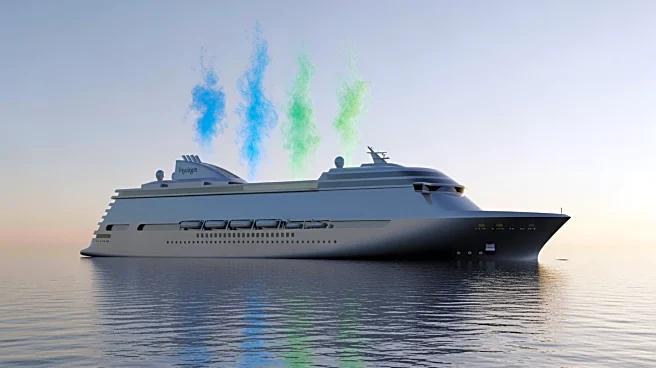
Fincantieri has launched the Viking Libra, which is being hailed as the world's first hydrogen-powered cruise ship. This development marks a significant milestone in the cruise industry, advancing the goal of zero-emission shipping. The Viking Libra, weighing
54,300 gross tons, is equipped with a propulsion system that partially relies on liquefied hydrogen and fuel cells. This initiative is part of a broader collaboration between Fincantieri and Viking to develop environmentally friendly cruise vessels. The ship is designed to operate with zero emissions, allowing it to navigate sensitive environmental areas. The Viking Libra is expected to be delivered by the end of 2026, followed by another ship, the Viking Astrea, which will also feature the hydrogen system.
Why It's Important?
The launch of the Viking Libra represents a significant step forward in addressing environmental concerns within the cruise industry. By utilizing hydrogen fuel cells, the ship aims to reduce emissions and set a precedent for future cruise ship designs. This innovation could lead to a broader adoption of hydrogen technology in maritime transport, potentially reducing the industry's carbon footprint. The high cost of hydrogen-powered operations remains a challenge, but Viking anticipates that costs will decrease over time, making this technology more accessible. The success of this project could influence regulatory policies and encourage other cruise lines to invest in sustainable technologies.
What's Next?
Following the launch of the Viking Libra, the focus will be on its operational performance and the effectiveness of its hydrogen propulsion system. The industry will closely monitor the ship's ability to meet zero-emission targets and its impact on operational costs. If successful, this could lead to increased investment in hydrogen technology across the maritime sector. Additionally, Viking's continued collaboration with Fincantieri suggests further advancements in sustainable cruise ship designs. The delivery of the Viking Astrea, also equipped with hydrogen technology, will be another critical milestone in this ongoing effort.