







What's Happening?
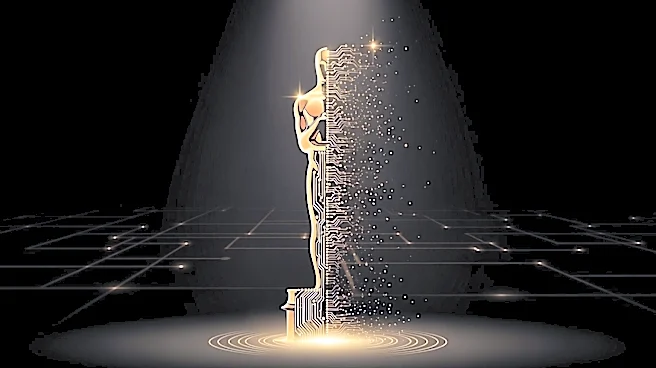
The Academy of Motion Picture Arts and Sciences has announced significant changes to its rules for the 99th Oscars, aiming to address barriers in the eligibility process and adapt to technological advancements. Key changes include the introduction of AI
protections for actors and writers, ensuring that only roles performed by humans with their consent are eligible for acting awards. This move effectively excludes AI-generated characters, such as the digital creation Tilly Norwood, from consideration. Additionally, the Academy has expanded the eligibility criteria for international films, allowing them to qualify by winning top prizes at major international festivals, rather than solely through country nominations. This change shifts the focus from geopolitical entities to the filmmakers themselves. The new rules also permit actors to receive multiple nominations in the same category if their performances rank in the top five, a departure from the previous rule that limited actors to one nomination per category.
Why It's Important?
These rule changes reflect the Academy's response to evolving technologies and the global filmmaking community's feedback. By excluding AI-generated performances, the Academy aims to protect creative jobs and maintain the integrity of human artistry in film. The expanded eligibility for international films democratizes the nomination process, potentially increasing diversity and representation at the Oscars. This could lead to a broader range of films being recognized, enhancing the cultural richness of the awards. The ability for actors to receive multiple nominations in the same category acknowledges the prolific work of actors in a single year, potentially increasing competition and prestige within the acting categories. These changes are likely to influence the strategies of filmmakers and actors as they navigate the awards landscape.
What's Next?
The new rules are set to take effect for films released in 2026, impacting the nominations for the 99th Oscars. As the industry adapts to these changes, filmmakers and actors may adjust their strategies to align with the new eligibility criteria. The Academy's decision to investigate the use of generative AI in submissions suggests ongoing scrutiny and potential further adjustments to the rules as technology continues to evolve. The film community's largely positive response indicates a supportive environment for these changes, but the true impact will be observed in the coming years as the new rules are implemented and tested in practice.