
What's Happening?
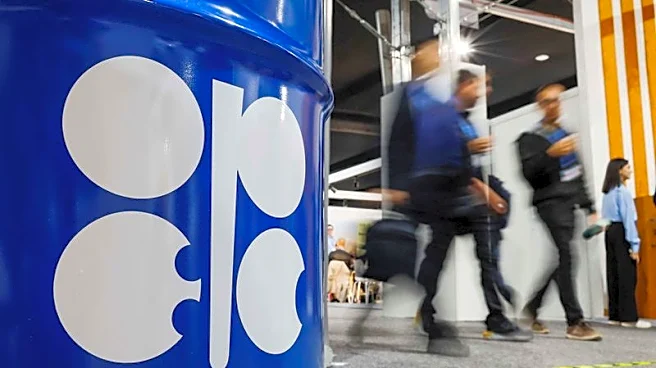
OPEC+ is set to increase oil output quotas despite the ongoing closure of the Strait of Hormuz due to the Iran-U.S. conflict. The group, which includes major oil producers like Saudi Arabia, Iraq, and
Russia, plans to raise output targets by about 188,000 barrels per day in June. This decision comes as the UAE exits the group, and the increase is largely symbolic until the Strait reopens. The conflict has significantly reduced exports from key OPEC+ members, pushing oil prices to a four-year high. The disruption has led to predictions of jet fuel shortages and increased global inflation.
Why It's Important?
The decision by OPEC+ to increase oil output quotas is significant as it reflects the group's strategy to maintain supply levels despite geopolitical tensions. The closure of the Strait of Hormuz, a critical chokepoint for global oil shipments, has disrupted oil flows, affecting global markets. The symbolic nature of the output increase highlights the challenges faced by oil producers in balancing supply amid geopolitical conflicts. The situation has broader implications for global energy markets, potentially leading to higher fuel prices and inflation, impacting economies worldwide.
What's Next?
The reopening of the Strait of Hormuz is crucial for normalizing oil flows, but it may take weeks or months for full recovery. OPEC+ will continue to monitor the situation, and further adjustments to output quotas may be necessary depending on geopolitical developments. The ongoing conflict and its resolution will play a significant role in shaping future oil market dynamics. Stakeholders, including governments and businesses, will need to adapt to potential supply chain disruptions and price volatility.