
What's Happening?
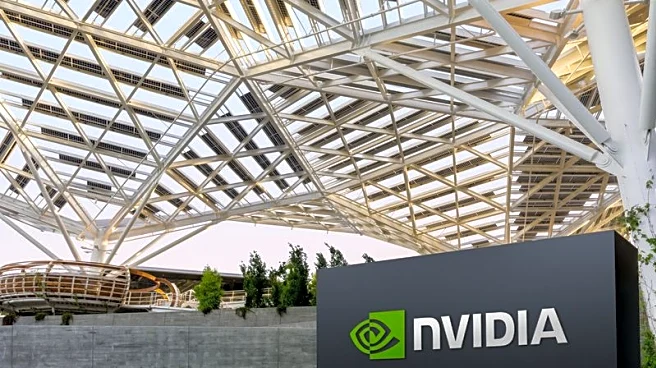
At Nvidia's GTC conference, CEO Jensen Huang announced ambitious plans for the company's AI chip sales, projecting $1 trillion through 2027. The keynote highlighted Nvidia's strategic focus on AI infrastructure, autonomous vehicles, and entertainment
applications. Huang emphasized the importance of an 'OpenClaw strategy' for companies to integrate AI technologies. The conference showcased Nvidia's growing web of partnerships and its role in shaping the future of AI-driven industries.
Why It's Important?
Nvidia's projection of $1 trillion in AI chip sales underscores the company's pivotal role in the AI industry. As AI technologies become increasingly integral to various sectors, Nvidia's chips are positioned to be foundational components in applications ranging from autonomous vehicles to entertainment. The company's partnerships and strategic initiatives reflect the expanding influence of AI in shaping technological advancements and economic growth. Nvidia's focus on AI infrastructure highlights the potential for transformative changes in how industries operate and innovate.
What's Next?
Nvidia's ambitious sales projections and strategic focus on AI infrastructure suggest continued growth and expansion in the AI sector. The company's partnerships and initiatives may lead to new applications and innovations, driving further integration of AI technologies across industries. As Nvidia pursues its goals, it may face challenges related to competition, technological development, and market dynamics. The success of its AI chip sales could influence industry standards and set benchmarks for other companies in the AI space.
Beyond the Headlines
The emphasis on AI infrastructure and partnerships at Nvidia's GTC conference highlights broader trends in the technology industry. As companies increasingly adopt AI technologies, issues related to data privacy, ethical considerations, and regulatory compliance may become more prominent. Nvidia's role in shaping the AI landscape could influence discussions on these topics and drive industry-wide efforts to address challenges associated with AI integration.