






What's Happening?
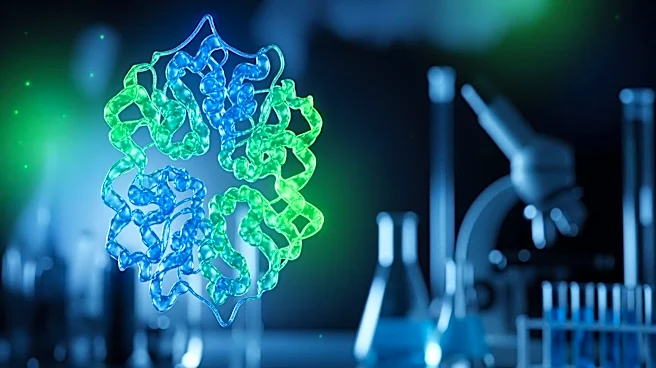
The Hong Kong Polytechnic University (PolyU) has pioneered a new method for data storage using engineered proteins, addressing the growing demand for efficient data storage solutions driven by AI and big data. This innovative approach leverages proteins as carriers
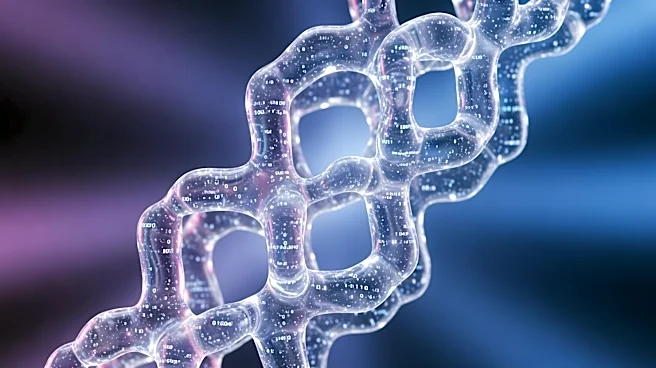
for digital information, offering superior storage capacity, stability, and encryption compared to traditional methods. The research, led by Professor Zhongping Yao, involves encoding digital data into protein sequences, which are then expressed in living cells. This method provides a sustainable and scalable solution for data preservation, with proteins demonstrating remarkable longevity and functional versatility.
Why It's Important?
As digital data continues to grow exponentially, traditional storage solutions are reaching their limits. PolyU's protein-based storage offers a promising alternative, with the potential to revolutionize data storage by providing higher density and stability. This advancement could significantly impact industries reliant on large-scale data storage, such as cloud computing and data centers. Additionally, the biocompatibility of protein-based storage opens new possibilities for embedding digital archives within living organisms, potentially transforming fields like bioinformatics and personalized medicine. The research highlights the intersection of synthetic biology and information technology, paving the way for future innovations in data storage.