
What's Happening?
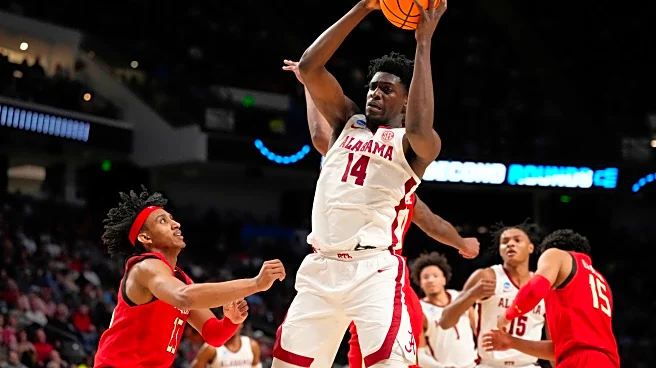
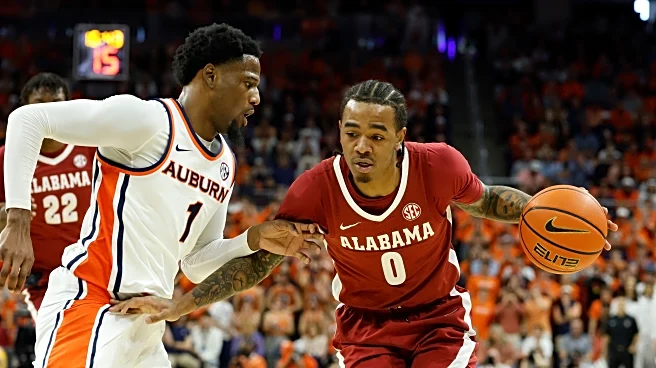
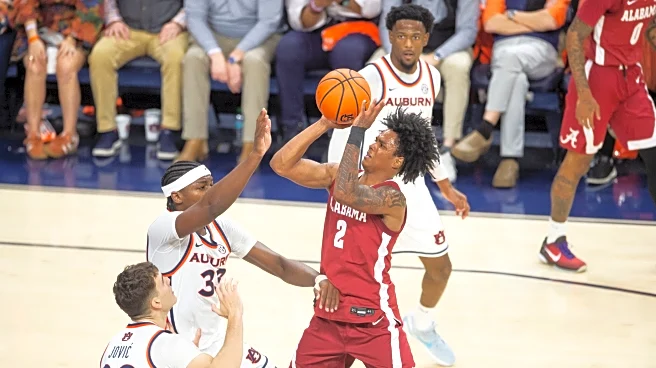
Charles Bediako, a former professional basketball player, has been ruled ineligible to continue playing for Alabama's men's basketball team. This decision follows a court ruling that denied Bediako's injunction to play during the 2025-26 season. NCAA President Charlie Baker praised the ruling, emphasizing that college sports should prioritize student athletes over professionals returning to college. Bediako, who played for Alabama in the 2021-22 and 2022-23 seasons, had left for the NBA draft but was not selected. He later signed a two-way NBA contract and played in the G League. Despite his professional experience, Bediako attempted to return to college basketball, arguing he still had eligibility left. The court's decision supports the NCAA's
stance against allowing former professionals to return to college sports, which they argue could undermine opportunities for current students.
Why It's Important?
The ruling has significant implications for college sports, particularly in maintaining the integrity of amateur athletics. By upholding the NCAA's eligibility rules, the court reinforces the boundary between professional and college sports, ensuring that college teams remain a platform for student athletes. This decision could deter other former professionals from attempting similar returns, preserving opportunities for younger athletes. Additionally, the ruling highlights ongoing debates about the role of name, image, and likeness (NIL) rights in college sports, as professional players might seek to exploit these opportunities. The NCAA's call for congressional action suggests a need for clearer national standards to address these complex issues.
What's Next?
Following the court's decision, Alabama will proceed with its season without Bediako, who had been a key player. The NCAA may continue to push for legislative support to establish more consistent rules across states, addressing the challenges posed by varying state laws on athlete compensation and eligibility. This case could also prompt other colleges to review their policies and ensure compliance with NCAA regulations. Stakeholders in college sports, including universities and athletic associations, may advocate for reforms to better balance athlete rights with the traditional amateur model.