






What's Happening?
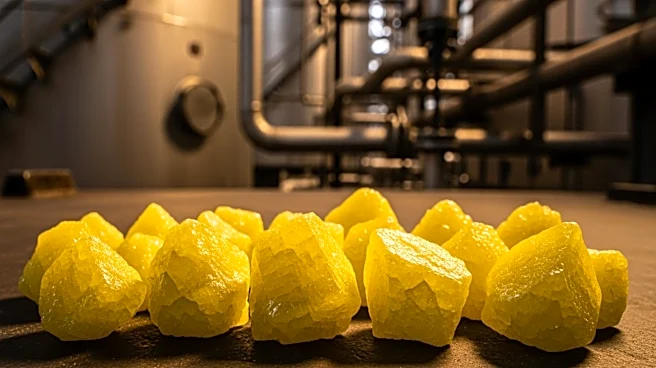
A significant increase in sulphur prices, driven by the ongoing conflict in Iran, is affecting nickel producers in Indonesia. Sulphuric acid, a crucial component in mining and metal refining, has seen its prices rise by approximately 20% in Indonesia,
reaching around $600 per ton. Some transactions for high-pressure acid leaching nickel refiners have exceeded $700 per ton. The Middle East, responsible for 24% of global sulphur production, is experiencing disruptions due to the conflict, impacting the supply chain. This price surge is also affecting copper miners in Africa, with prices rising by 37% to $715 per ton. The current sulphur prices are the highest recorded in at least five years, according to Argus data.
Why It's Important?
The increase in sulphur prices poses a significant challenge for Indonesian nickel producers, potentially delaying project expansions and slowing supply growth. This situation could have broader implications for the global nickel market, affecting prices and availability. The impact on African copper miners is similar, with potential delays in project developments in the copperbelt region. The price surge may benefit China's copper smelters, providing a financial offset against weak treatment and refining charges. The situation underscores the interconnectedness of global commodity markets and the influence of geopolitical events on economic activities.
What's Next?
If sulphur prices remain high, Indonesian nickel producers may need to reassess their operational strategies, possibly leading to increased costs for consumers. The situation could prompt industry stakeholders to seek alternative sources or methods to mitigate the impact of rising costs. Additionally, the geopolitical situation in the Middle East may continue to influence sulphur production and pricing, requiring ongoing monitoring by industry analysts and policymakers.
Beyond the Headlines
The sulphur price surge highlights the vulnerability of global supply chains to geopolitical conflicts. It raises questions about the sustainability of current mining practices and the need for diversification in sourcing critical materials. The situation may also prompt discussions on the environmental impact of increased mining activities and the role of alternative technologies in reducing dependency on sulphuric acid.