
What's Happening?
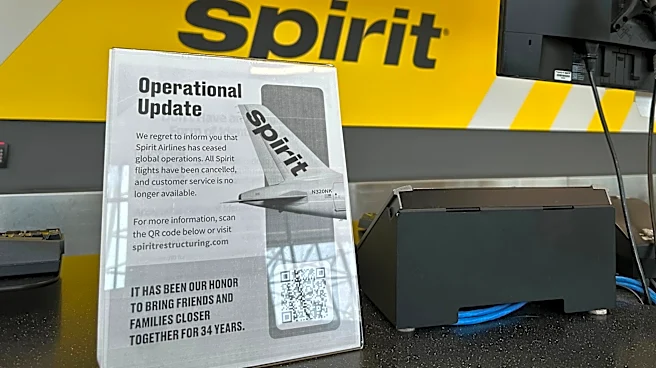
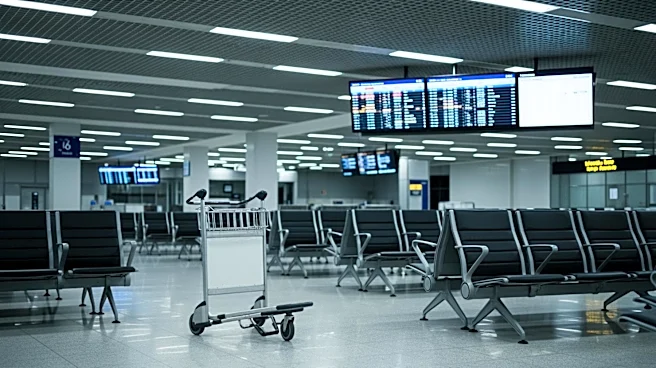
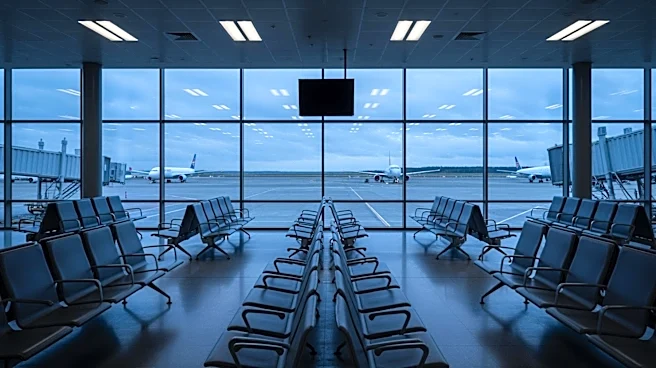
Spirit Airlines has announced an immediate cessation of operations, canceling all flights and halting customer service. The shutdown has left thousands of passengers stranded across the United States.
The airline, known for its low-cost travel model, had been struggling financially, having filed for bankruptcy twice. Efforts to merge with JetBlue were blocked by the U.S. Justice Department, and a last-minute rescue deal failed to materialize. As a result, Spirit has begun an orderly wind-down of its operations after 34 years in business. Passengers are being issued refunds and advised to rebook with other airlines.
Why It's Important?
The shutdown of Spirit Airlines marks a significant shift in the U.S. airline industry, particularly affecting the low-cost travel sector. Spirit's collapse could lead to increased airfares as competition decreases, impacting budget-conscious travelers. The airline's closure also raises concerns about the stability of other low-cost carriers in the face of rising operational costs, such as fuel prices. Additionally, the shutdown affects Spirit's employees, who now face job uncertainty. Other airlines are stepping in to offer 'rescue fares' and employment opportunities, highlighting the industry's resilience and adaptability.
What's Next?
In the wake of Spirit's shutdown, other airlines are offering discounted fares to accommodate stranded passengers. The U.S. Department of Transportation is coordinating efforts to assist affected travelers and employees. The airline's assets, including routes and airport slots, are likely to be acquired by other carriers through the bankruptcy process. This could lead to a reshuffling of market share among airlines, with potential bids from carriers like Frontier and JetBlue. The situation underscores the need for strategic planning and financial stability in the airline industry.