
What's Happening?
The Georgia Institute of Technology has expanded its Advanced Manufacturing Pilot Facility into a larger testbed focused on artificial intelligence-driven manufacturing. This expansion aims to bridge the
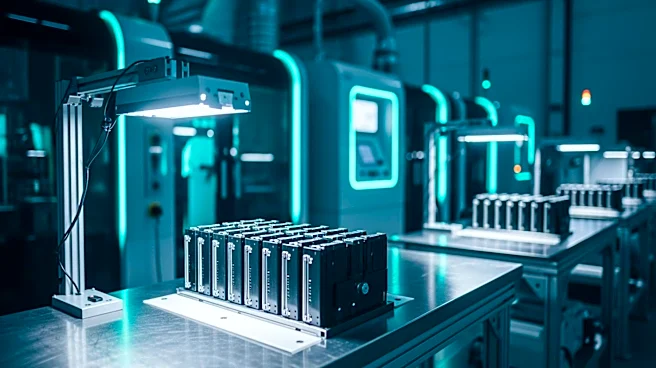
gap between research and commercial deployment by providing a space where companies, researchers, and students can develop and test automation systems. The facility, initially established in 2017, received a $65 million grant in 2022 to support statewide collaboration on AI in manufacturing. Georgia Tech invested over $23 million to enhance the facility with systems for AI-enabled manufacturing, robotic automation, and more. The renovated 20,000-square-foot facility officially opened last month, offering a consortium model for companies to access facility time and engage in direct research partnerships.
Why It's Important?
This development is significant as it addresses a critical barrier in the adoption of AI technologies in manufacturing. By providing access to industrial-scale machinery and a collaborative environment, Georgia Tech's facility helps startups and established companies alike to validate AI systems before full-scale deployment. This initiative not only accelerates innovation in manufacturing but also strengthens the workforce by involving students in practical research and design projects. The facility's focus on integrating disparate systems and data formats further enhances its utility, making it a pivotal resource for advancing AI applications in various industries, including aerospace and automotive.
What's Next?
Looking ahead, Georgia Tech plans to explore remote applications and new materials, such as plastics and ceramics, within the facility. The university aims to expand access through a programmable cloud library, allowing researchers to submit questions remotely and access lab-generated data without direct equipment operation. This model could significantly broaden the facility's reach and impact, potentially transforming how AI-driven manufacturing research is conducted globally. The ongoing partnerships with entities like the Robins Air Force Base and the U.S. Navy highlight the facility's strategic importance in national defense and industry innovation.