



What's Happening?
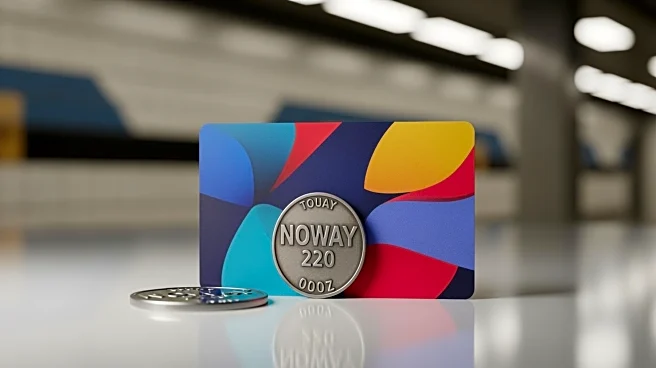
The New York Transit Museum is hosting an exhibition titled 'Inspired by MetroCard' at Grand Central Terminal, showcasing the artistic transformation of the iconic MetroCard. The exhibition, which opens on March 16, 2026, highlights how artists have used the retired transit card as a medium for creative expression over its three-decade history. The MetroCard, which was retired on December 31, 2025, was a staple of New York City transit, replacing tokens in 1994 and becoming a cultural icon. The exhibition features a variety of artworks, including fashion, sculpture, painting, and collage, as well as limited-edition collector cards. Notable pieces include Nina Boesch's mosaic-like collages, Barbara Kruger's provocative designs, and Nina Vishneva's
MetroCard wedding dress. The exhibition will be open through October 2026 at the Grand Central Gallery and Store.
Why It's Important?
The exhibition underscores the cultural significance of the MetroCard, which has been a part of New York City life for over 30 years. By showcasing the card as an artistic medium, the exhibition highlights the intersection of everyday objects and creative expression. This event not only celebrates the MetroCard's legacy but also reflects on the broader cultural and historical impact of public transit in urban life. The transition to the OMNY system marks a technological shift, but the exhibition ensures that the MetroCard's cultural contributions are not forgotten. This initiative by the New York Transit Museum provides a platform for artists to reinterpret a familiar object, fostering a deeper appreciation for the role of public transit in shaping city culture.
What's Next?
The exhibition will run until October 2026, allowing ample time for visitors to explore the creative works inspired by the MetroCard. As the city continues to transition to the OMNY system, the exhibition serves as a reminder of the MetroCard's impact on New York City's transit history. The New York Transit Museum may continue to explore similar themes in future exhibitions, potentially focusing on other aspects of the city's transit evolution. Additionally, the success of this exhibition could inspire other cultural institutions to explore the artistic potential of everyday objects, further bridging the gap between art and daily life.