






What's Happening?
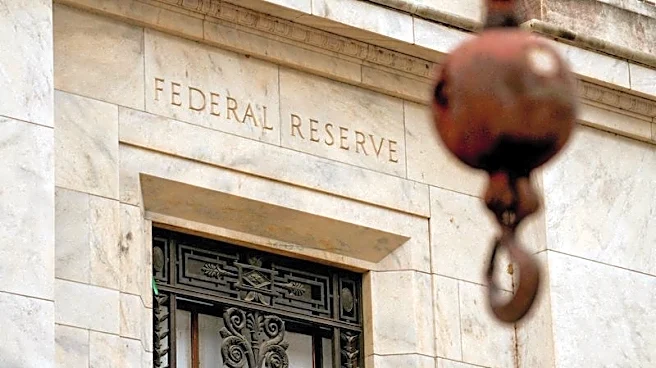
The Federal Reserve's March meeting minutes reveal a growing openness among policymakers to consider interest rate hikes. This development is driven by inflationary pressures resulting from the U.S.-Israeli conflict with Iran, which has disrupted global
shipping and caused oil prices to surge. While the Fed held its benchmark interest rate steady in the 3.50%-3.75% range, the minutes highlight the tension between inflation risks and the potential need for rate cuts if economic growth is significantly impacted. The conflict in the Middle East presents a dual challenge for the Fed, threatening both its inflation target and full employment mandate.
Why It's Important?
The Federal Reserve's consideration of interest rate hikes amid geopolitical tensions underscores the complex economic landscape. The conflict in the Middle East has introduced significant uncertainty, affecting global oil prices and inflation. The Fed's decisions will have far-reaching implications for the U.S. economy, influencing borrowing costs, consumer spending, and business investment. The central bank's ability to balance inflation control with economic growth is critical for maintaining financial stability. The outcome of these deliberations will shape market expectations and economic policy in the coming months.
What's Next?
The Federal Reserve will continue to assess the impact of the Middle East conflict on inflation and economic growth. Policymakers will need to weigh the risks of persistent inflation against the potential for economic slowdown. Future meetings will focus on evaluating economic data and geopolitical developments to determine the appropriate monetary policy response. The Fed's ability to navigate these challenges will be crucial for achieving its dual mandate of price stability and maximum employment.