



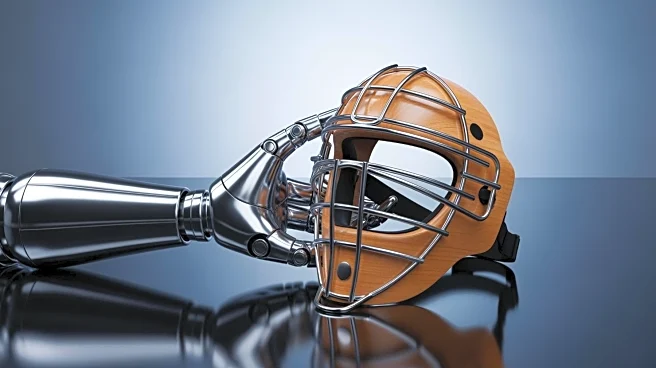
What's Happening?
Major League Baseball has introduced an Automated Ball-Strike System (ABS) in its 2026 season, aiming to enhance the accuracy of pitch calls. The system uses Hawk-Eye technology, employing 12 cameras to measure whether a pitch crosses the strike zone
with precision up to one-sixth of an inch. During the first 12 games of the season, teams successfully challenged 61.3% of calls, with 19 out of 31 challenges being upheld. Managers and players are adjusting to the new system, which can overturn calls such as walks and strikeouts based on real-time data. The system's implementation has already influenced game outcomes, as seen in the Boston Red Sox's 3-0 victory over the Cincinnati Reds, where overturned calls led to crucial scoring opportunities.
Why It's Important?
The introduction of the ABS represents a significant shift in how baseball games are officiated, potentially reducing human error and increasing fairness in pitch calling. This technological advancement could impact game strategies, as teams may need to adapt to the precision of the system. The success rate of challenges suggests that players and managers are learning to leverage the system effectively, which could lead to more strategic gameplay. The ABS may also influence the training and development of pitchers and catchers, who must adjust to the system's accuracy. Overall, the system could enhance the integrity of the sport, attracting more fans and increasing engagement.
What's Next?
As the season progresses, teams will continue to adapt to the ABS, potentially refining their challenge strategies to maximize its benefits. MLB may monitor the system's performance and make adjustments based on feedback from players and managers. The league could also consider expanding the use of technology in other areas of the game, such as base running or fielding. Stakeholders, including team owners and sponsors, will likely evaluate the system's impact on game dynamics and fan experience. The success of the ABS could pave the way for further technological innovations in baseball.
Beyond the Headlines
The implementation of the ABS raises questions about the role of human judgment in sports and the balance between technology and tradition. While the system aims to improve accuracy, it may also alter the dynamics between players and umpires, potentially reducing the latter's authority. The reliance on technology could lead to ethical considerations regarding data privacy and the potential for manipulation. Additionally, the system's success may influence other sports to adopt similar technologies, sparking a broader conversation about the future of officiating in athletics.