
What's Happening?
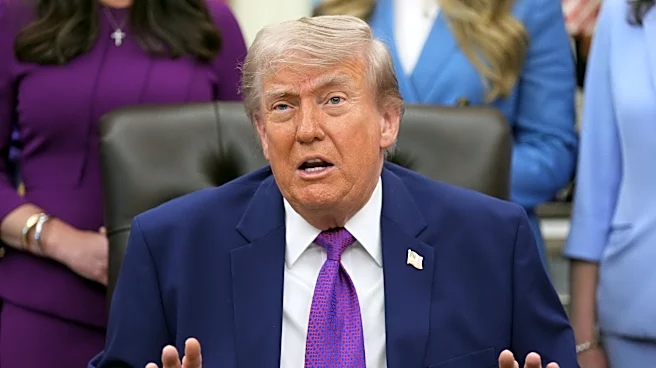
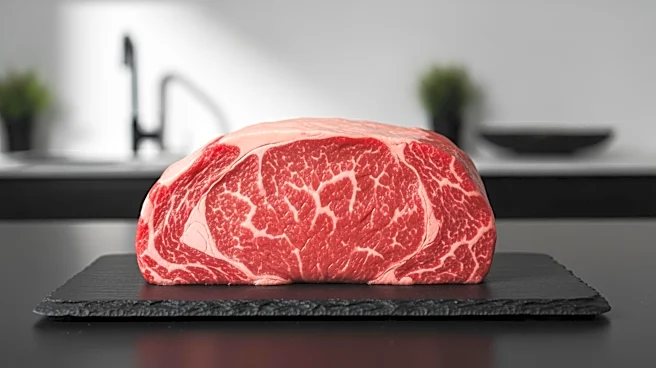
President Trump is set to sign two executive orders aimed at reducing beef prices, which have surged by 40% over the past five years. The orders are designed to increase beef imports and support the renewal
of the U.S. cattle herd, which has reached a 75-year low due to severe drought and rising production costs. One order will temporarily suspend the annual tariff-rate quota on beef imports, allowing more beef to enter the U.S. at a lower price. The second order will direct the Small Business Administration to enhance loans and capital access for U.S. cattle ranchers, while also reducing regulatory requirements such as electronic ear tags for livestock. These measures come as part of the administration's efforts to address food inflation and improve consumer affordability ahead of the midterm elections.
Why It's Important?
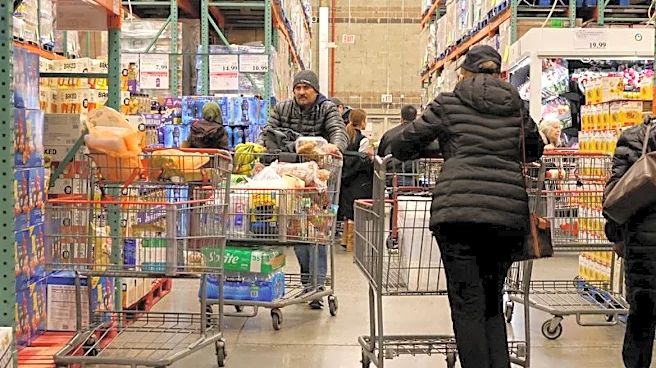
The executive orders are significant as they address the ongoing issue of food inflation, particularly in the beef sector, which has been a major driver of rising grocery costs. By increasing beef imports and supporting domestic cattle production, the administration aims to stabilize prices and provide relief to consumers. However, these actions may face opposition from U.S. cattle ranchers, who have expressed concerns over increased competition from foreign imports. Additionally, the orders reflect broader economic strategies to manage inflation and consumer sentiment, which have been impacted by global events such as the Iran war and supply chain disruptions.
What's Next?
The implementation of these executive orders is likely to prompt reactions from various stakeholders, including domestic cattle ranchers and meatpacking companies. The Department of Justice's ongoing antitrust investigation into major meatpackers could also influence the market dynamics. As the U.S. increases beef imports, particularly from countries like Brazil, Australia, and Canada, the administration will need to balance domestic production support with international trade relations. The effectiveness of these measures in reducing beef prices will be closely monitored, especially as the midterm elections approach and economic conditions remain a key voter concern.