






What's Happening?
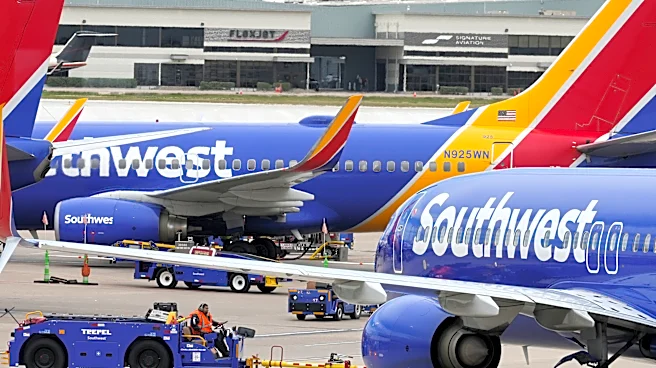
Southwest Airlines has announced a new policy limiting passengers to carrying only one portable charger on flights, effective April 20. This measure aims to reduce the risk of lithium battery fires on aircraft. Passengers are required to keep chargers
in the open during use, allowing flight attendants to quickly address any overheating issues. The policy exceeds the International Civil Aviation Organization's recommendation of two chargers per passenger. Southwest will not enforce the rule by searching bags but will inform travelers of the risks when booking and at the airport. The Federal Aviation Administration reported 97 lithium battery incidents in 2025, highlighting the growing concern as more devices are carried on flights. The airline plans to equip all planes with in-seat power by mid-next year to accommodate this new rule.
Why It's Important?
The introduction of this policy by Southwest Airlines underscores the increasing safety concerns associated with lithium batteries on flights. As the number of electronic devices carried by passengers rises, so does the potential for battery-related incidents. The policy aims to prevent catastrophic events, such as the January 2025 fire on an Air Busan plane, by minimizing the risk of battery fires. This move could set a precedent for other airlines, prompting industry-wide changes to enhance passenger safety. The policy also reflects a proactive approach to aviation safety, potentially influencing regulatory standards and passenger awareness about the dangers of lithium batteries.
What's Next?
Southwest Airlines' new policy may lead to similar measures by other airlines, as they seek to mitigate the risks associated with lithium batteries. The airline's plan to install in-seat power by next year could become a standard feature across the industry, enhancing passenger convenience while adhering to safety protocols. Additionally, increased awareness and education about the risks of lithium batteries could lead to further regulatory developments and innovations in battery safety technology. Stakeholders, including regulatory bodies and consumer safety organizations, may push for more stringent guidelines and enforcement to ensure passenger safety.